


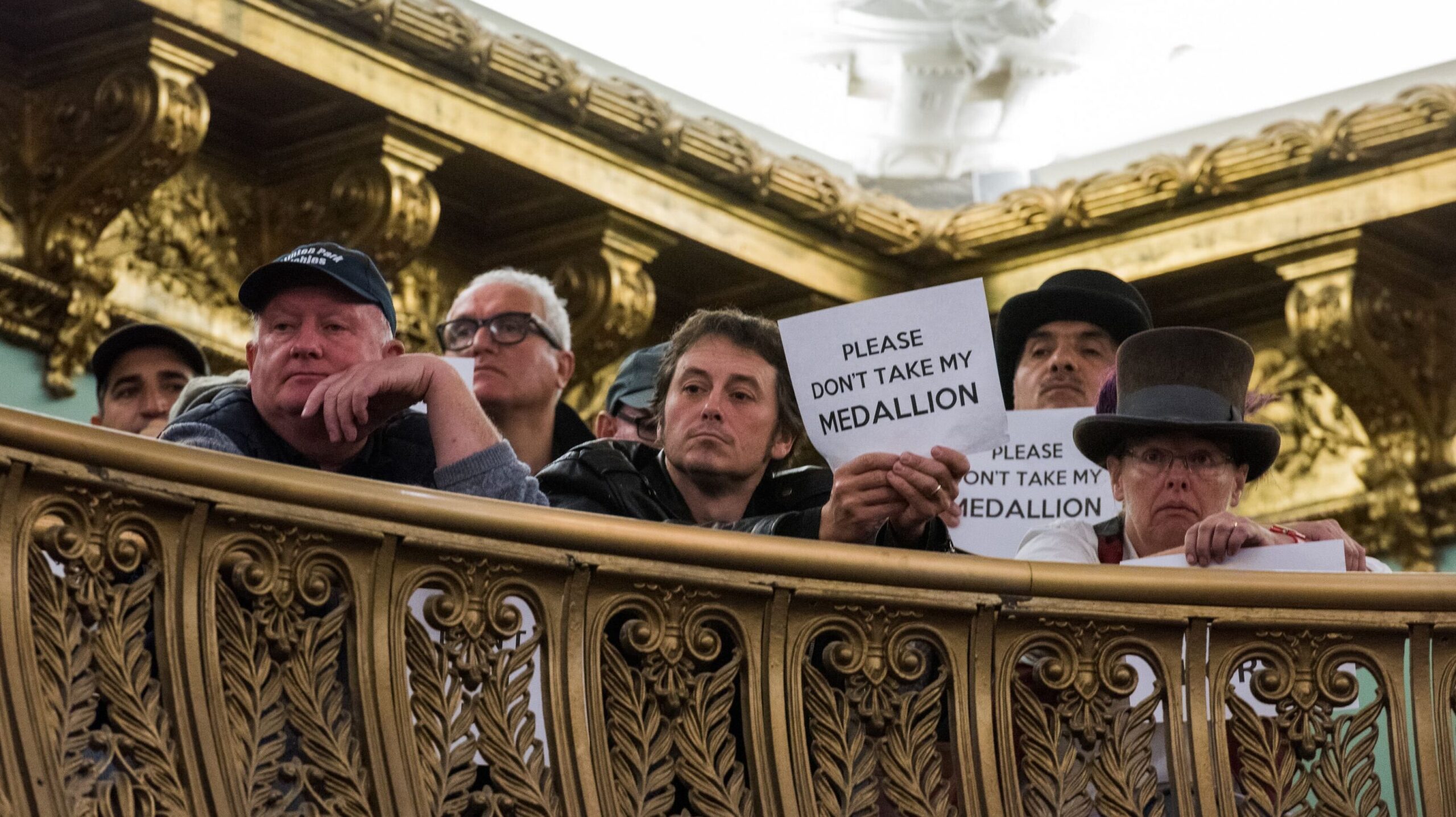


The New York City Council voted Thursday to ban Central Park’s storied horse-drawn carriages, a NYC tradition cherished by many but under increasing fire over the last several months over issues ranging from the safety of passengers and pedestrians to the well-being of the horses.
The vote to ban, which was expected, is likely to trigger an immediate court challenge from the Transport Workers Union, which represents the industry’s medallion owners and drivers. The union said earlier Thursday it planned to challenge the constitutionality of the law “the minute the ink dries.”
The council voted in favor of the bill banning Central Park’s horse-drawn carriages 40-7 Thursday afternoon, officials said. Two councilmembers abstained.

Both Council Speaker Julie Menin and Mayor Mamdani support the measure, which passed with a veto-proof majority.
“Passing this law proves not simply that we are committed to making our city safer and more livable for residents, tourists and animals alike — it proves that we can live up to the commitments that we make,” Menin said ahead of the vote.
A Mamdani spokesman said the mayor would be signing the bill into law.
“The mayor will sign this bill, and the Mamdani administration is working every day to ensure we can do so while providing the strongest possible protections for the owners and workers in this industry,” Sneha Choudhary said in a statement on the bill’s passage.

The council bill, known as Romanch’s Law, is named for the 18-year-old boy who was killed jumping from a runaway horse-drawn carriage in June, a tragedy that significantly upped the pressure to ban carriage rides.
The law puts a stop to the issuance of new carriage-horse licenses and outlaws the industry entirely by the summer of 2028. The bill also requires that should carriage owners sell their horses, they cannot sell them to another carriage industry or to be slaughtered.
Animal rights activists have argued in favor of banning the industry for more than two decades, calling the work dangerous and inherently abusive to the equines.

Before Mahajan’s death this year, the city council bill to outlaw the industry was known as “Ryder’s Law,” named for a horse that collapsed and died on the street in Midtown in 2022.
The bill was renamed in June after Romanch Mahajan, an 18-year-old tourist from India, died while jumping after his mother when their carriage horse bolted on a sightseeing tour in the park. The driver was not in the carriage at the time.
Sovi Thukral, Romanch’s aunt, spoke Thursday at a rally in support of the bill in City Hall Park.
“Please do not let Romanch become just the name of a law,” she said. “Remember the young life behind it — his dreams, his compassion, and the sacrifice that brought us here today.”

The council’s actions have left drivers angry and frustrated.
A massive hole in the bill, many of those who work in the industry argue, is the lack of any clear compensation for those who have invested millions in medallions, horses and carriages to support an industry the city authorized and long regulated. The bill nods at the issue, but there are no firm dollars set aside for those whose investments are now virtually worthless.
“That is going to be up to the administration,” Menin said, when asked prior to the vote why there was no guarantee of compensation in the language of the bill.
“Our legislative team was in discussions with the legislative team of the administration to come up with language — we were very clear we wanted to strengthen the worker protection language,” she said. “It is now up to the administration to work on that plan — the plan that basically compensates the medallion owners, the plan that ensures that these workers have jobs.”

In a statement, the TWU reiterated its plan to sue.
“We will see them in court,” Alexander Kemp, TWU Local 100’s administrative vice president, said. “This bill is blatantly unconstitutional, providing nothing but a plan to draft a plan. There’s nothing concrete for hundreds of workers, carriage owners and family members who face total economic devastation.”
The full council vote follows this morning’s 6-3 nod by the council’s health committee.
Councilmember Joann Ariola (R, Queens), who up until Wednesday had been a cosponsor of the bill, voted no, citing concerns over whether the city could sufficiently transition carriage horse workers into new jobs.
“This is how we feed our families,” Frank Riccobono, an owner and driver with 20 years in the business, told the News. “And now we’re going to be in a big financial crisis and there’s no language promising any figure like a buy-back program or an alternative business.”
“It’s like my American dream was happening, and now the Americans are shattering my American dream,” he said. “We’re very scared. I haven’t slept. I don’t want to wake up in the morning. I’m depressed.”

President Trump weighed in on the ban, saying it was “so sad” that the “quintessential New York experience” was on its way out.
“So sad to see the beloved Central Park Horse-drawn Carriage Industry ending after over a Century, based largely on one tragic accident,” he posted on Truth Social. ” When there is a car accident in the area, of which there are many, they don’t stop cars from entering the Park. So why would they stop the Carriages? It was a Great Tradition. Another piece of History that’s gone. It will be missed!”
