'/%3E%3C/svg%3E)

'/%3E%3Cpath%20fill='%23b2b2b2'%20d='M241%20382q0%2016%2017%2026%2017%2011%2042%2011t42-11q16-11%2017-26V269H241'/%3E%3Cpath%20fill='%239f7e00'%20d='M241%20379q0%2014%208%2023%209%209%2021%209%2014%200%2021-9%209-9%209-23V269h-59'/%3E%3Cpath%20d='M241%20339v-70h59v110q0%2014-9%2023l-6%205v-68h-15v72q-8%200-14-4v-68zm59%2040c0%2022%2015%2032%2029%2032%2021%200%2030-18%2030-32v-40h-59'/%3E%3Cpath%20fill='%239f7e00'%20d='M266%20277v5h2v12h-3v-5h2v-5h-9v5h2v5h-4v9h3v18h-5v10h34v-10h-5v-18h3v-9h-4v-5h2v-5h-9v5h2v5h-3v-12h2v-5zm42%20101q0%2010%206%2017%206%206%2015%207%2010-1%2016-7%206-7%206-17v-29h-43'/%3E%3Ccircle%20fill='%230044ad'%20cx='329.5'%20cy='372'%20r='6'/%3E%3Cellipse%20fill='%230044ad'%20cx='300'%20cy='340'%20rx='16'%20ry='21'/%3E%3C/svg%3E)


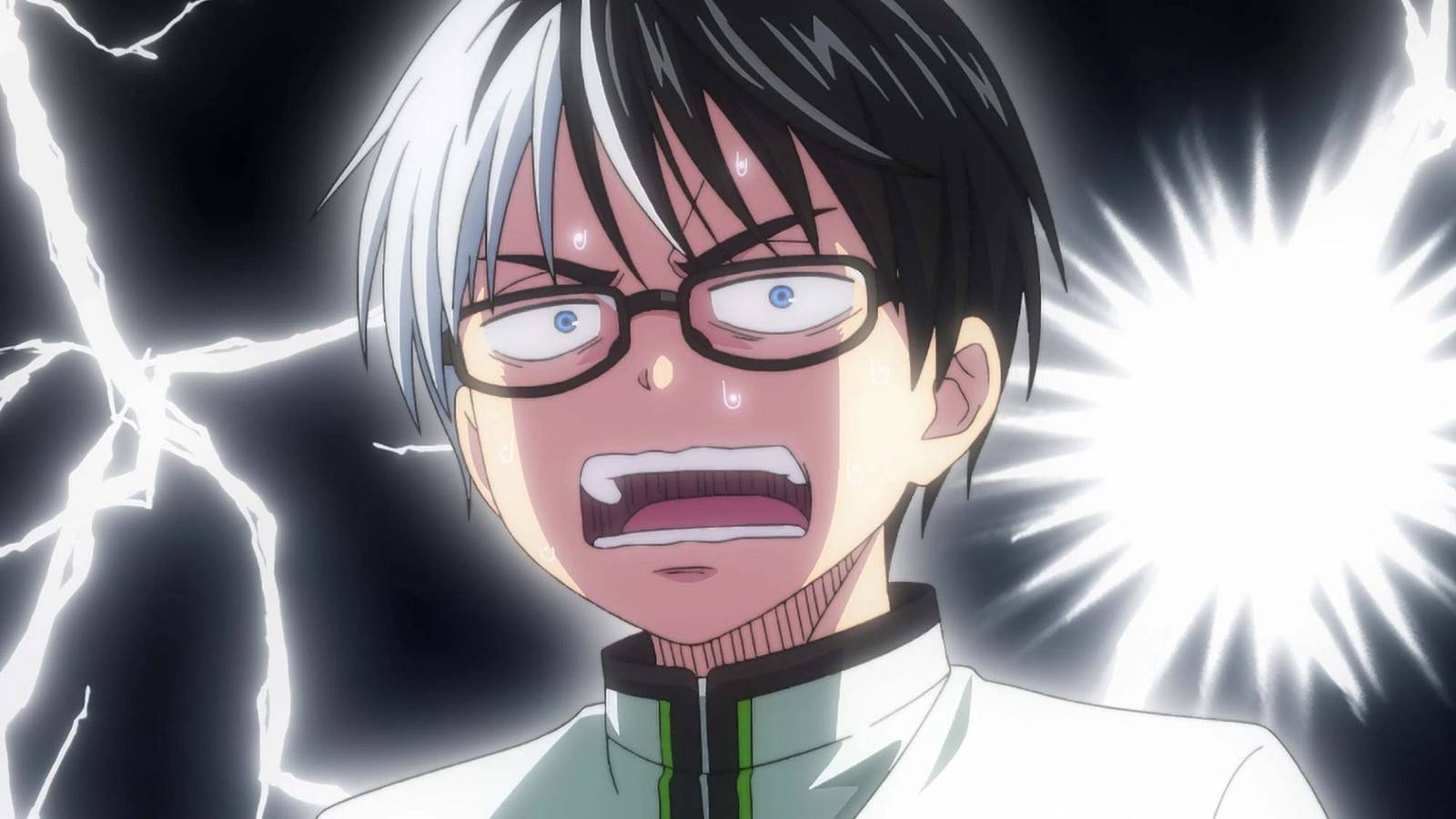


Spring 2026 is a season full of exciting anime titles, particularly the newcomers. Among them is yet another comedy of the underworld and crime variety; kin of highly successful titles like SPY x FAMILY and SAKAMOTO DAYS and peer of Studio BONES’ Spring 2026 adaptation of Joumyaku and Mizuki Yoda’s MARRIAGETOXIN, a series known simply as Kill Ao (Kill Blue).The premise sets the series up to be like the hilarious result of the marriage between something like SPY x FAMILY and Detective Conan (Case Closed), making it perfect for fans of either series, but there’s more to Kill Blue than that.Here’s why it should be on your viewing roster this Spring anime season.
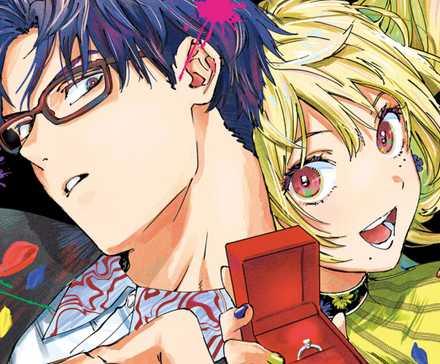
RELATED
Could This Manga Become the Next Spy x Family?
MARRIAGETOXIN by Joumyaku and Mizuki Yoda sets up a premise similar to Tatsuya Endo’s hit, Spy x Family, but could it become something greater?
What’s Kill Blue About?
A Jaded Hitman Finally Gets a Childhood
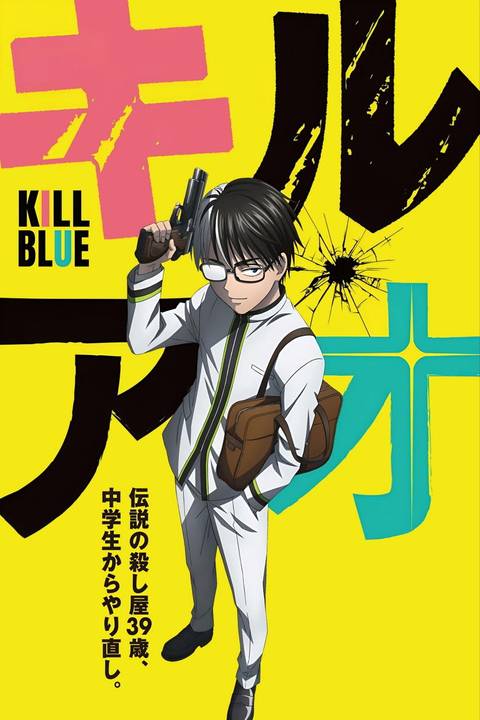
Kill Blue follows 39-year-old Jūzō Ōgami, the top-rated hitman at the assassination syndicate known as Z.O.O., who has his entire life flipped on its head when a job taking down cronies working for pharmaceutical and genetic research conglomerate, Mitsuoka Pharmaceuticals, goes awry. After easily brushing aside the various thugs in the area and spending the night at his lavish, modern apartment, Ōgami is stung by a wasp developed by the company.
The sting sends pain throbbing throughout his body, and he loses consciousness, waking up in the laboratory of Z.O.O Science Department Head, Eri Wanibuchi. Ogami notices that his voice is higher and skin smoother than ever before – because he’s been turned back into a middle schooler.
Who’s That Character?
Identify the silhouettes before time runs out.
Easy (7.5s)
Medium (5.0s)
Hard (2.5s)
Permadeath (2.5s)
Start
Restart
Back
Results
0
High Score: 0
—
Identify the silhouettes before time runs out.
Easy (7.5s)Medium (5.0s)Hard (2.5s)Permadeath (2.5s)Start
RestartBack
0
High Score: 0
—
Wanibuchi explains that the wasp had undergone genetic manipulation, making it unlike any other wasp they’d encountered. With his livelihood on the line, Ōgami tells the boss of the organization that he’s willing to work as usual, but the boss has a different mission in mind for him: to go to middle school! The reason for this strange mission is that the boss wants to enroll his daughter at Rikka, a private middle school, the following year. Now Ōgami must balance his job with his studies as he tries to blend into his new life, all while seeking a way to return his body to the way it was.
A Familiar Formula, Reprised
Like A Fun Marriage Between SPY x FAMILY and Detective Conan
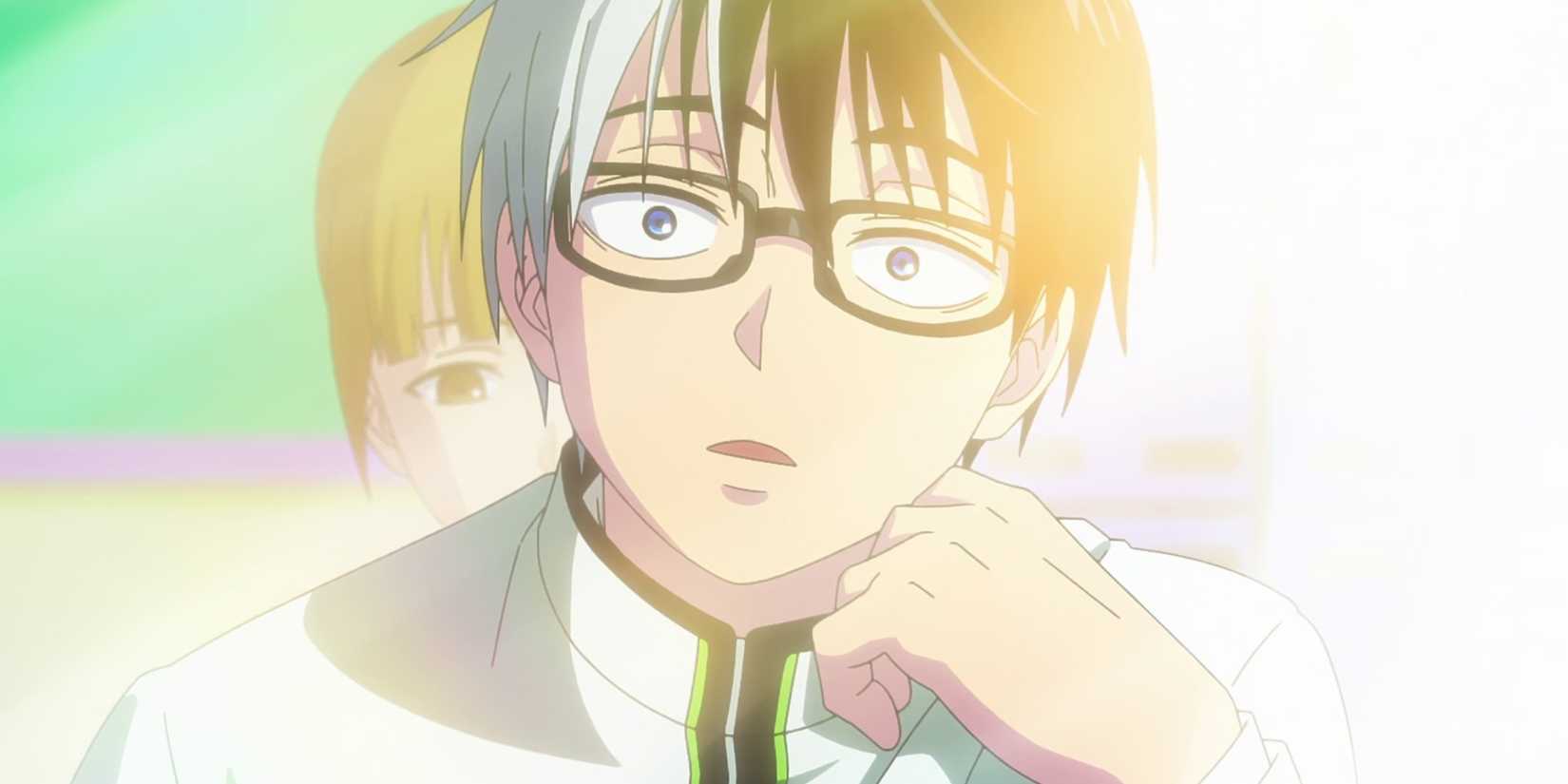
©Tadatoshi Fujimaki/Shueisha・”Kill Ao” Production Committee
On the surface, the concept of a protagonist getting de-aged is certainly not new, and the most famous instance of this in anime and manga is in Gōshō Aoyama’s Detective Conan (Case Closed in the United States), with Shinichi Kudō’s close run-in with dead at the hands of members of the mysterious Black Organization resulting in his regression into an 8-year-old. In Kill Blue, Ōgami is regressed to around 13 or 14 years old, about the age of the average grade eight student, which also happens to be around the same age as his estranged daughter.
Just like in other similar titles, Ōgami’s abilities are effectively superhuman, enabling him to rise to the top of a precarious occupation. This exaggeration of expertise is at the heart of stories such as this, and similar examples include “Loid Forger” from Tatsuya Endō’s SPY x FAMILY; the titular family from Mission: Yozakura Family; Kentaro Yabuki’s Black Cat; the main duo from Buddy Daddies and more.
Kill Blue’s similarity to SPY x FAMILY lies in the fact that Ōgami must infiltrate a school environment, much like Loid does through Anya, but ultimately, the mission that they are given puts them in countless situations that cause their hardened exterior to soften. Ōgami never had a childhood, having been taught the ins and outs of murder from a young age, so the connection between the things he learns in middle school and his experiences aligns in a way that really makes him appreciate the education of which he was deprived as a child.
It’s an extremely wholesome development in a situation that anyone would want to end almost immediately. There’s the added context of Ōgami’s inability to interact well with children due to not really knowing how to talk to them, and how that has negatively impacted his relationship with his daughter. Being the same age, in this day and age, could grant Ōgami a unique clarity that could help him close the distance between himself and his family. These are all just excited conjectures about the direction in which Kill Blue could go, because it has done extremely well so far, blending action and comedy in a brilliant production by a relatively newborn studio, Cue.
Great Visual Production By a Relatively New Studio
Experienced Staff Bring Expressiveness and Heart in Adapting Tadatoshi Fujimaki’s Manga
Visually, Kill Blue looks great. You’d almost think it was the work of a veteran studio; a production à la J.C. Staff, Dōga Kōbo, Brain’s Base, but it’s actually by CUE. Established by former Production I.G. animation producer Rui Kuroki (executive producer, Terminator Zero), the studio currently only has three anime projects under its belt, Kill Blue included, but that isn’t stopping the production staff from delivering satisfying, expressive animation and an interesting visual aesthetic.
Viewers will note the striking use of blue and green in the series’ colour palette, which is likely a nod to the title. It could potentially be a reference to the blue haze produced in photographs taken in places where tobacco is being smoked heavily, given that Ōgami is a cigarette smoker. Since we’re effectively following the series from his point of view, the “blue haze” could be the sense of dissatisfaction that inspires Ōgami’s listlessness. Attending school, and getting the chance to have a normal childhood is, in effect, the panacea that will help Ōgami end his sadness and loneliness – to kill the blue(s). On the other hand, “ao” is also used in reference to greens found in nature (as opposed to “midori”, meaning “green”), which could be a reference to Ōgami’s regression to his teenage years, attaching the colour “ao” (green/blue) to his inexperience as a regular schoolkid.
Colour designers Shiho Suzuki (Blue Exorcist: Shimane Illuminati Saga) and Yoshinori Horikawa (various Blue Exorcist installments, Blue Giant) did an incredible job to incorporate blue into as much of the backgrounds as possible without making it look too out of the ordinary and rather stylized, with art direction from prolific background artist and art director Taketo Gonpei; who has done outstanding work as a background artist for titles like Demon Slayer: Kimetsu no Yaiba, Makoto Shinkai’s Suzume and the Zom 100: Bucket List of the Dead adaptation by Witch Hat Atelier studio BUG FILMS. Director Yasunari Ide’s experience with storyboarding and directing slice-of-life and comedy titles shines through to deliver some really hilarious moments, while key animator and character designer for Kill Blue, Miho Daidōji, delivers great character designs based on the manga that move really well.
The animation might not be one intense sakuga moment after another, but the sense of movement in the scenes when Ōgami gets serious is done in a way that communicates his dynamism and ability exceptionally. It might be silly to say, but it may have been intentional to have gathered so many individuals with credentials working on other “Blue” titled anime!
Kill Blue is available to watch on Crunchyroll. New episodes air on Saturdays.
Kill Blue
Cast

Yuko Sanpei
Juzo Ogami (voice)