'/%3E%3C/svg%3E)

'/%3E%3Cpath%20fill='%23b2b2b2'%20d='M241%20382q0%2016%2017%2026%2017%2011%2042%2011t42-11q16-11%2017-26V269H241'/%3E%3Cpath%20fill='%239f7e00'%20d='M241%20379q0%2014%208%2023%209%209%2021%209%2014%200%2021-9%209-9%209-23V269h-59'/%3E%3Cpath%20d='M241%20339v-70h59v110q0%2014-9%2023l-6%205v-68h-15v72q-8%200-14-4v-68zm59%2040c0%2022%2015%2032%2029%2032%2021%200%2030-18%2030-32v-40h-59'/%3E%3Cpath%20fill='%239f7e00'%20d='M266%20277v5h2v12h-3v-5h2v-5h-9v5h2v5h-4v9h3v18h-5v10h34v-10h-5v-18h3v-9h-4v-5h2v-5h-9v5h2v5h-3v-12h2v-5zm42%20101q0%2010%206%2017%206%206%2015%207%2010-1%2016-7%206-7%206-17v-29h-43'/%3E%3Ccircle%20fill='%230044ad'%20cx='329.5'%20cy='372'%20r='6'/%3E%3Cellipse%20fill='%230044ad'%20cx='300'%20cy='340'%20rx='16'%20ry='21'/%3E%3C/svg%3E)


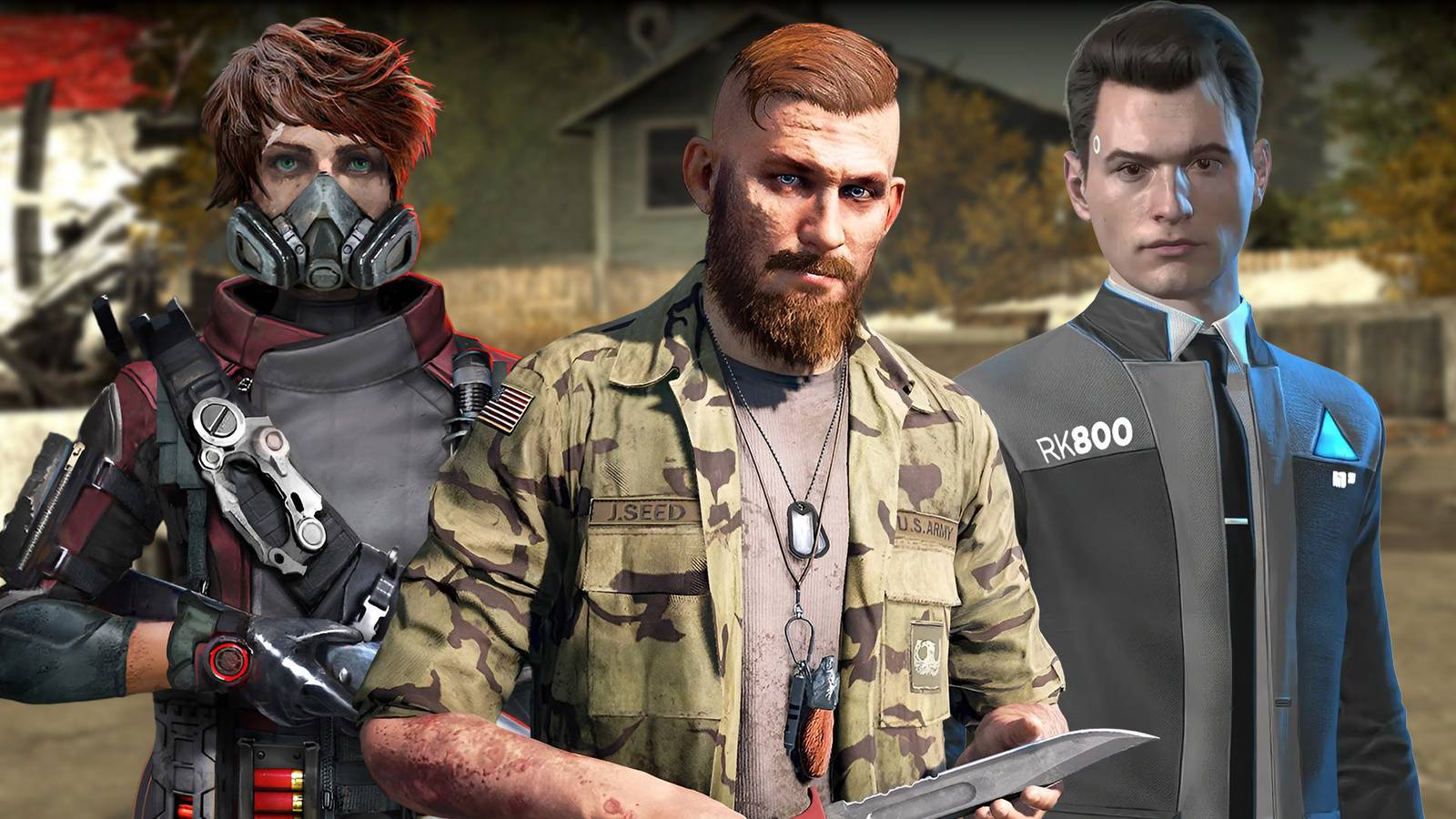


Fictional stories have always drawn parallels to our reality, with many even crossing the boundary between make-believe and real-world events. One common theme that a lot of games have explored over the years is related to armed conflict, and more specifically, civil wars and battles over everything from resources to land to total global control, something that has only become more relevant as time has gone on.
Related
11 Computer Wargames That Are 10/10 Masterpieces
Wargames are a unique type of strategy games, and these are the absolute best in the 4x genre.
Our world today is statistically the safest it has ever been in terms of war, but that doesn’t mean that civil unrest and large-scale battlegrounds don’t exist. As we push into the future, it is nice to take a glimpse at and experience a completely fictional environment. While these stories may be only based on glimmers of truth, they can still teach us a lot about what it means to find common ground and peace in the midst of hostility.
Fit the 9 games into the grid.
Start
Pick a tile to place a game.
Time: 00:00
Hint
New
Submit
Start
Criteria Grid
Pick a tile to place a game.
Time: 00:00
HintNewSubmit
Tom Clancy’s The Division 2
Collapsing From Within
Explores the fragmentation of social order.
Civil conflict emerges from desperation.
Tom Clancy’s The Division 2 presents a version of society where government systems and public trust have broken down almost completely. Washington, D.C., has become a battleground between civilian militias, opportunistic factions, and the remnants of state authority that are struggling to maintain any semblance of control. I think what makes the game feel so real is both the grounded setting and focus on genuinely meaningful missions, rather than pure action.
You’re not just running around gunning down enemies 24/7, but actually pushing back bad actors and reclaiming a city that once stood tall and proud. Also, the focus being on instability as opposed to a total apocalypse allows the narrative to pay far closer attention to the technical realities of the in-game world. You find out about misinformation, infrastructure failures, and a deep ideological fragmentation that drives the conflict far more than any singular villain. As a result, the events connect far more to our current social and political climate than many people would expect.
Far Cry 5
Extremism Taken To The Extreme
Religious militancy replaces traditional military conflict.
Civilian vulnerability is emphasized in every mission.
Far Cry 5 takes place far away from city centers and bustling metropolises, focusing on the conflict surrounding the occupation of rural Montana by a heavily armed doomsday cult. Where some games depict large armies clashing directly with the main population, here, an emphasis is placed on the communities trapped inside a cycle of escalating ideological extremism, which is encompassed by a suffocating level of paramilitary control.
Related
Best Strategy Games That Let You Avoid Conflict
Not every strategy game forces the player into conflict. In some, it can be avoided entirely.
The more isolated setting is what gives Far Cry 5 a lot of weight, with basic farms, churches, roads, and miniature towns becoming the epicenter of a much broader battle, making the violence feel uncomfortably grounded in a place that many would call their home. I always thought the game stood out from others in the series. Despite some absurd moments, a lot of the action and narrative events feel very realistic, relying less on spectacle and instead exploring the idea that radicalization can emerge gradually within ordinary environments that exist across the globe.
Deus Ex: Human Revolution
When Technology And Society Collide
Human augmentation becomes a source of political fracture.
Corporate influence weakens global authority.
When it comes to our society and its slow integration with technology, few games hit the nail on the head quite like Deus Ex: Human Revolution. You are thrown right into the middle of a civil conflict based around technological inequality and social division, where human augmentation creates new class systems and increasingly aggressive political polarization across major cities, resulting in widespread fear and corruption at all tiers of society.
The game’s futuristic setting may push it outside our current capabilities, but the themes surrounding corporate control and the distrust between institutions and citizens are very relevant today, regardless of who you are or where you come from. It doesn’t portray a conventional war; rather, it depicts a slow societal destabilization driven by competing visions of the future, something that we will almost certainly end up facing at some point in the coming decades.
Detroit: Become Human
The Next Step For Humanity
Android autonomy sparks protests and riots.
Public opinion directly shapes the direction of the unrest.
Detroit: Become Human is, for me, one of the scariest mirrors to our reality that exists in the gaming world. AI and humanity are growing closer and closer together, and it won’t be long before we get to live and walk alongside sentient robots, which is where the game focuses a lot of its themes, moving the androids from consumer products to political actors and forcing society into an uncomfortable confrontation over what it means to be human.
Related
10 Best Military Open-World Games, Ranked
Whether part of the military or going against it, these are the best open-world games for armed combat.
What resonated most with me was how well many of the scenes and moments align with modern conventions. It doesn’t matter whether you’re looking at the news or the law enforcement responses; everything looks just as it would in real life, only with a few more advanced pieces of tech that still aren’t that far from being real. If you are someone who is fascinated by AI, or even scared by the prospect of advanced intelligence, I highly recommend giving Detroit: Become Human a try, especially now, before things start to get too similar.
Homefront
Occupation And Domestic Resistance
Suburban environments are transformed into active war zones.
Personal conflict between soldiers and civilians.
Homefront imagines a near-future United States fractured under the foreign occupation by Korea after a period of reunification. Because the story unfolds on home soil, some players will feel a greater connection to the events than others. As someone who lives outside of America, I could still appreciate the way the game presents its more day-to-day locations, like schools and residential streets, as just another setting for war to take over.
That familiarity of the environments brings a much darker atmosphere that feels eerie and uncomfortable. The other scary thing comes from how fast a lot of the environments are taken over, with civilian spaces becoming militarized almost overnight, reinforcing the sense that modern infrastructure is more vulnerable than it appears. Ultimately, I found that even though the conflict was far from the larger-scale apocalyptic shooters seen in the rest of the genre, the tone lands much harder due to the personal and localized nature of the fight, something that many people have come to value far more in the modern era.
More
7 Best RTS Games With Modern Military Battles
Recreating the modern wars after World War 2 is not a dream anymore!
