'/%3E%3C/svg%3E)

'/%3E%3Cpath%20fill='%23b2b2b2'%20d='M241%20382q0%2016%2017%2026%2017%2011%2042%2011t42-11q16-11%2017-26V269H241'/%3E%3Cpath%20fill='%239f7e00'%20d='M241%20379q0%2014%208%2023%209%209%2021%209%2014%200%2021-9%209-9%209-23V269h-59'/%3E%3Cpath%20d='M241%20339v-70h59v110q0%2014-9%2023l-6%205v-68h-15v72q-8%200-14-4v-68zm59%2040c0%2022%2015%2032%2029%2032%2021%200%2030-18%2030-32v-40h-59'/%3E%3Cpath%20fill='%239f7e00'%20d='M266%20277v5h2v12h-3v-5h2v-5h-9v5h2v5h-4v9h3v18h-5v10h34v-10h-5v-18h3v-9h-4v-5h2v-5h-9v5h2v5h-3v-12h2v-5zm42%20101q0%2010%206%2017%206%206%2015%207%2010-1%2016-7%206-7%206-17v-29h-43'/%3E%3Ccircle%20fill='%230044ad'%20cx='329.5'%20cy='372'%20r='6'/%3E%3Cellipse%20fill='%230044ad'%20cx='300'%20cy='340'%20rx='16'%20ry='21'/%3E%3C/svg%3E)



New Delhi
—
When British traders landed on India’s shores in the 1600s, they arrived in search of spices and silk but stayed for centuries – leaving behind a legacy that would shape the nation long after their colonial exploitation ended: the English language.
Over the centuries, English seeped into the very fabric of Indian life – first as a tool of commerce, then as the language of law and, eventually, a marker of privilege.
Now, after more than a decade of Hindu-nationalist rule, Prime Minister Narendra Modi’s Bharatiya Janata Party (BJP) is mounting perhaps the most significant challenge yet to the language’s place in India.
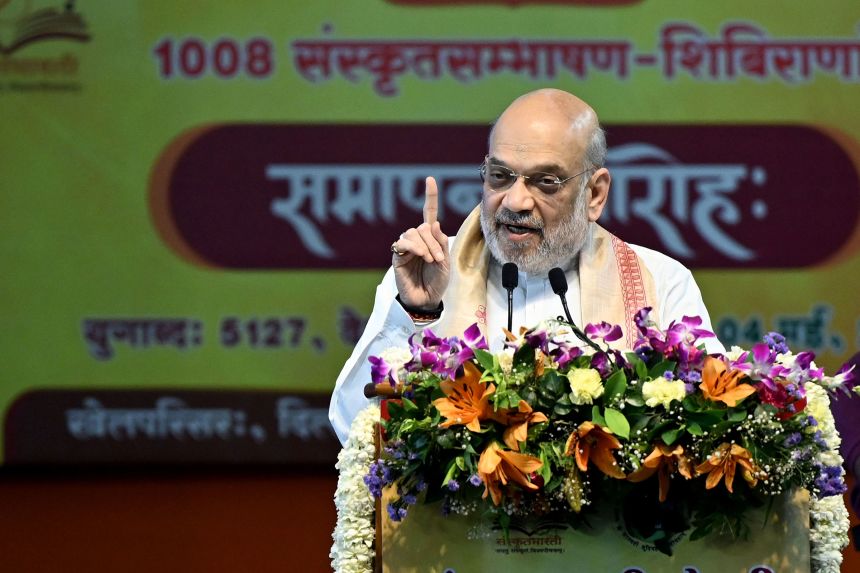
“Those who speak English will soon feel ashamed,” Home Minister Amit Shah said last month, igniting a heated debate about national identity and social mobility in the polyglot nation of 1.4 billion.
While Shah did not mention India’s former colonial masters, he declared that “the languages of our country are the jewels of our culture” – and that without them, “we cease to be truly Indian.”
Spoken behind the walls of colonial forts and offices, English in India was at first the language of ledgers and treaties.
But as British rule expanded from the ports of Gujarat to the palaces of Delhi, it became the lingua franca of the colonial elite.
At independence, India faced a dilemma. With hundreds of languages and dialects spoken across its vast landscape, its newly appointed leaders grappled with the question of which one should represent the new nation.
Hindi, the predominant language in the north, was put forward as a candidate for official language.
But strong resistance from non-Hindi-speaking regions – especially in the south – meant English would remain only as a temporary link to unite the country. It’s a legacy that endures to this day – and still rankles some.
“I subscribe to the view that English is the language of the colonial masters,” Pradeep Bahirwani, a retired corporate executive from the southern city of Bengaluru, said, adding: “Our national language should be a language which… has got roots in India.”
But critics argue that Shah’s remarks risk undermining the country’s global competitiveness. Equating English with cultural shame, they contend, reflects a narrow perspective that needlessly tries to erase a remnant of the colonial era that keeps India fluent in the language of global commerce.
“It’s the aspiration of people to have access to a language which has a lot of prestige internationally,” said Indian linguist Ayesha Kidwai, a professor at New Delhi’s Jawaharlal Nehru University. “I don’t think it’s the legacy of colonialism anymore.”
And pushback to the BJP’s recent messaging has been strong.
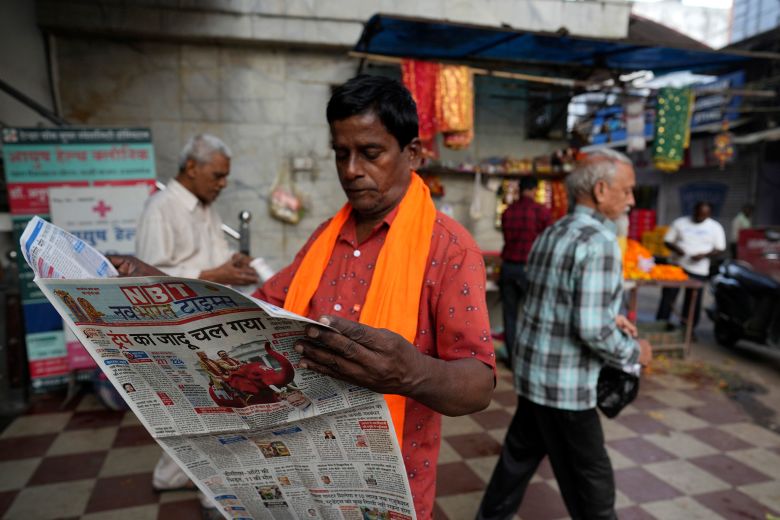
“English is not a barrier, it’s a bridge. English is not shame, it’s strength,” wrote leader of the opposition Rahul Gandhi on X, after Shah’s remarks last month. “Every Indian language has a soul, culture, and knowledge. We must cherish them – and at the same time, teach every child English.”
CNN has contacted India’s Home Ministry for comment.
But language tensions are no longer confined to debates in parliament – they’re spilling into the streets.
Just last week, video of a heated confrontation on a train in India’s financial hub Mumbai went viral after a passenger was allegedly harassed for not speaking the regional language Marathi. Clashes erupted elsewhere in the city over the federal government’s drive to promote Hindi – a language closely tied to the BJP’s northern power base and often seen as central to the party’s vision of national unity and Hindu identity.
Since India’s independence from Britain in 1947, the status of English in India has been deeply political – entwined with questions of identity, power, and national direction.
Today, English is one of several official languages in India, spoken by about 10% of the population. Hindi is the first language for around 44% of citizens, according to the 2011 census.
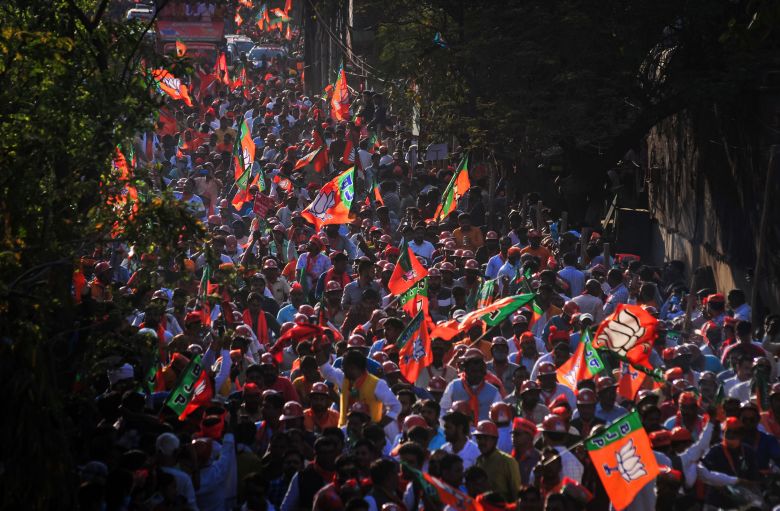
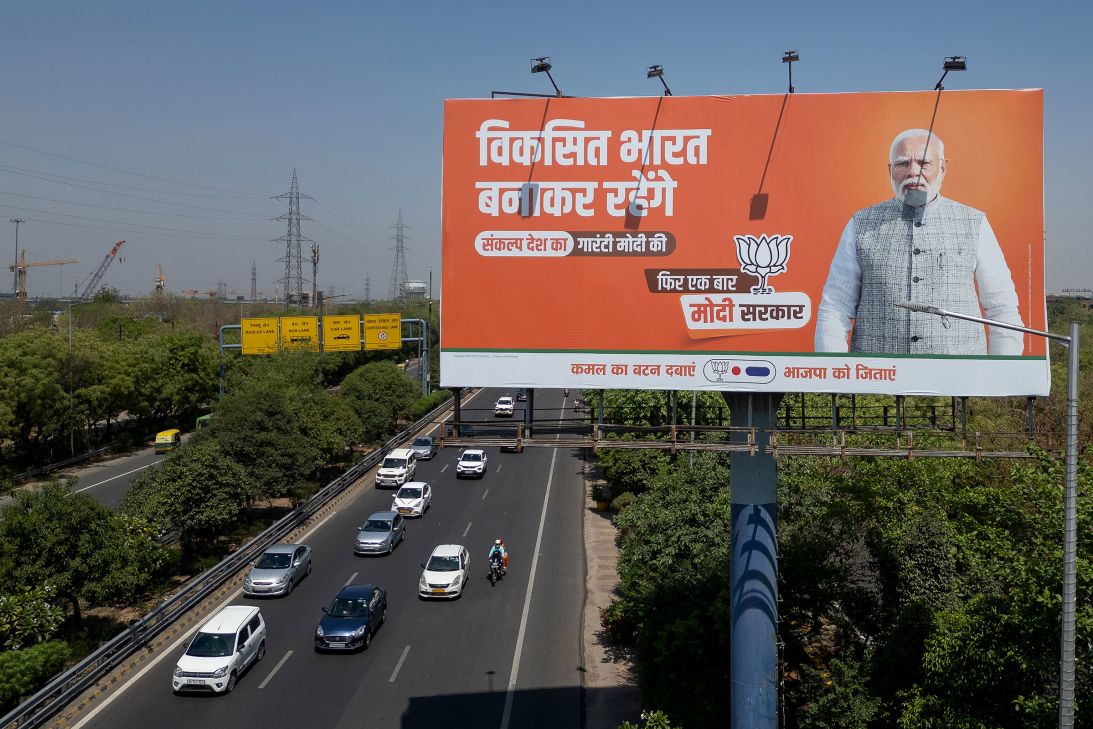
But in recent years, Modi’s BJP has placed particular emphasis on promoting Hindi and reducing the use of English in public life.
The prime minister almost never delivers speeches in English, preferring Hindi for national addresses such as his monthly radio program. His administration has encouraged officials to use Hindi on social media and in government correspondence – though, after criticism from non-Hindi-speaking states, clarified that this was intended mainly for the Hindi belt in the north.
When India hosted world leaders for the 2023 G20 summit in New Delhi, invitations were sent out from “Bharat” – the Sanskrit or Hindi name for the country – instead of “India,” fueling speculation that the government aims to ultimately phase out the country’s English designation altogether.
Modi’s critics have been quick to note his political motives behind these moves.
With its roots in the Rashtriya Swayamsevak Sangh (RSS), a right-wing organization that advocates Hindu hegemony within India, the BJP’s language policies resonate with many in a country where nearly 80% of people are Hindu.
Analysts say the BJP is seeking to capitalize on this demographic by promoting language policies that strengthen its support base in the north.
According to Rita Kothari, an English professor from Ashoka University, the government “is certainly interested in homogenizing the country and making Hindi more widespread.”
But that policy can also backfire – in part because many regions, such as Marathi-speaking Maharashtra in the west – are staunchly proud of their local language.
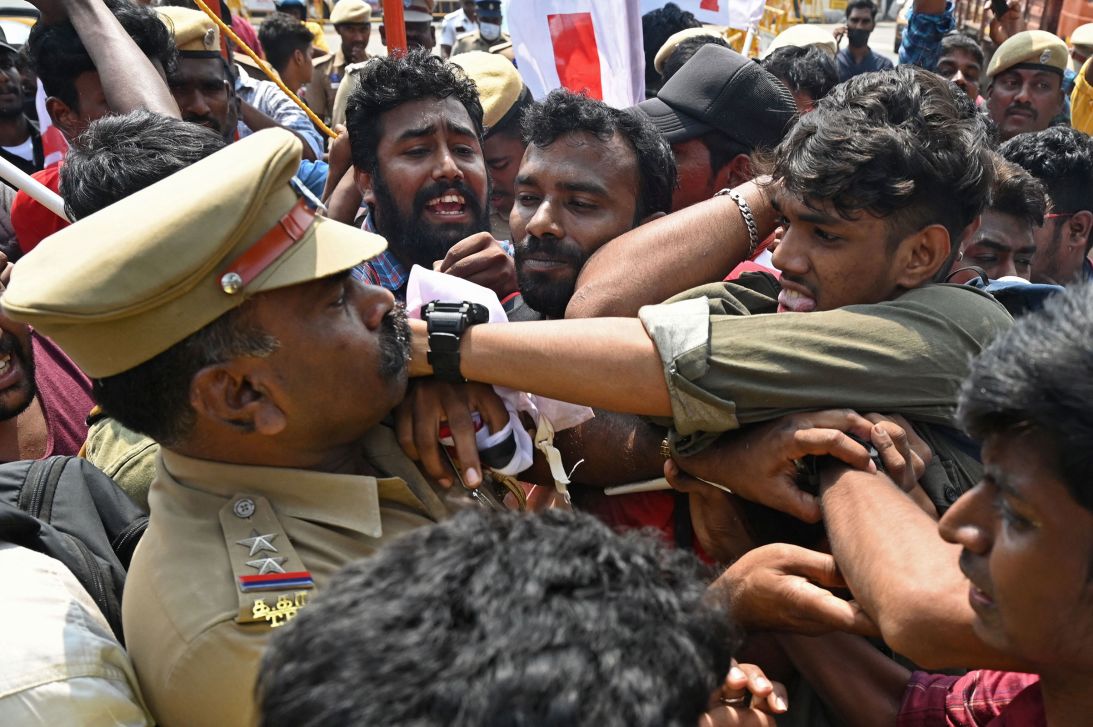
The violent clashes in the state’s megacity Mumbai earlier this month were sparked by the regional government’s controversial decision to make Hindi a compulsory third language in public primary schools.
Pushback and protest has also been especially strong in the south, where English and regional languages such as Tamil, Telugu, and Kannada are valued as symbols of local identity and autonomy.
For 19-year-old Steve E. Selvaraj from Tamil Nadu’s capital Chennai, “the BJP did a great job turning Hindi as their identity.” The college student, whose mother tongue is Tamil, said Hinduism has become a central focus for the ruling establishment – a way to “get more votes.”
“Day by day, the influence of Hindi is increasing,” Selvaraj said. “Hindi imposition may be a threat, but it will take a lot of time to disconnect the (local) connection with Tamil.”
Kothari, from Ashoka University, said going after English was a convenient way of the BJP promoting Hindi without ruffling regional feathers.
The government “knows that its chances of success in south India for instance are thwarted by linguistic pride and nationalism,” she said.
“Since they can’t make this public, English becomes a whipping boy.”
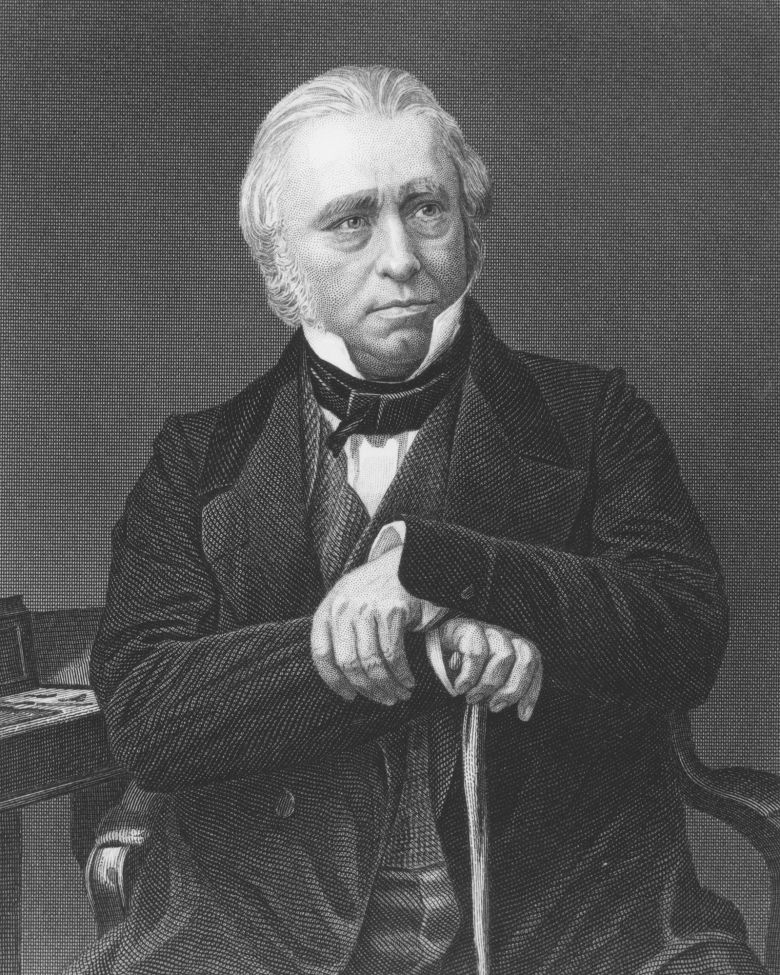
India’s widespread adoption of English can be traced back to the 19th-century British politician Thomas Macaulay, who advocated for the introduction of the language as the medium of instruction, instead of traditional languages of the elite like Sanskrit, Persian or Arabic.
Macaulay’s vision was unapologetically elitist. Creating a class of subjects who were “Indian in blood and colour, but English in taste, in opinions, in morals, and in intellect,” to serve as intermediaries between the colonial administration and the local population, he wrote, would help the British rule more effectively.
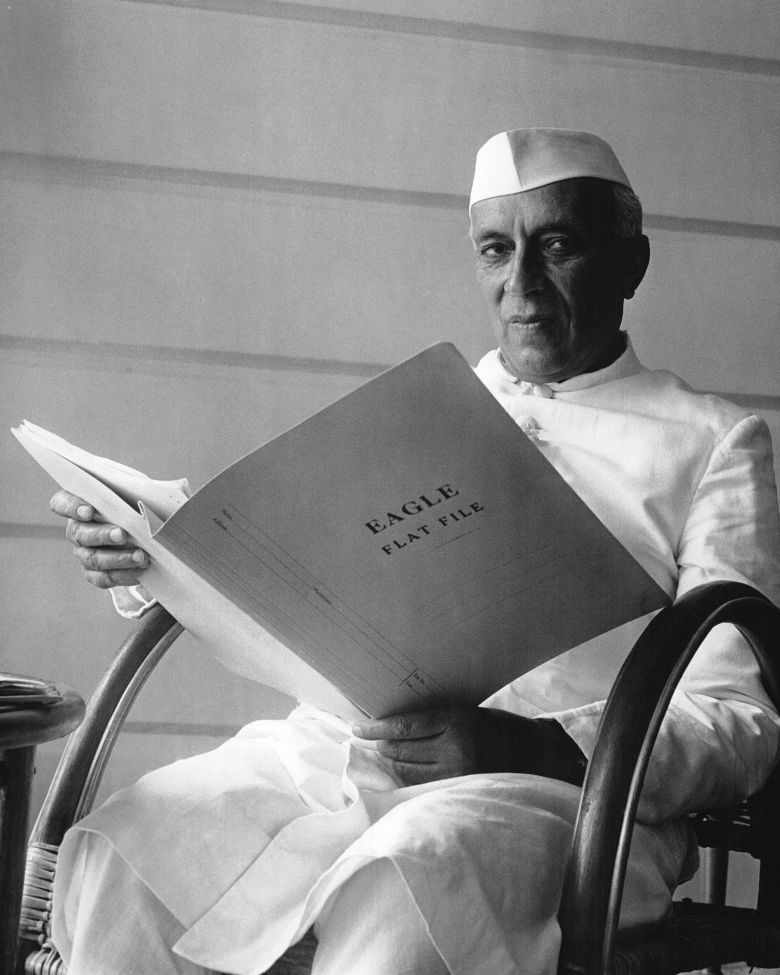
These views were adopted by the British government, making English the language of Indian administration, higher education and the judiciary. The policy fostered a privileged English-educated elite – lawyers, teachers and writers – including many of India’s early reformer nationalists, first Prime Minister Jawaharlal Nehru and father of the nation Mahatma Gandhi.
But over time, English became far more than a holdover from colonial rule – turning into a symbol of modernity and opportunity. As India’s economy transformed and its middle class expanded, English proficiency became crucial to upward mobility.
For Shivam Singh, 23, the first in his family to speak English and to leave home for university, the language opened doors.
“I wanted to get a good job… English gives you an edge. All the internships I cracked was because I could hold conversations in English.”
Singh practiced his spoken English on an AI app for hours, getting feedback that helped earn him the internships.
India is now home to one of the world’s largest English-speaking populations, with more than 130 million people reporting English proficiency in the 2011 census. This linguistic advantage has helped attract billions in foreign investment, enabled global partnerships, and powered sectors from tech support to startups.
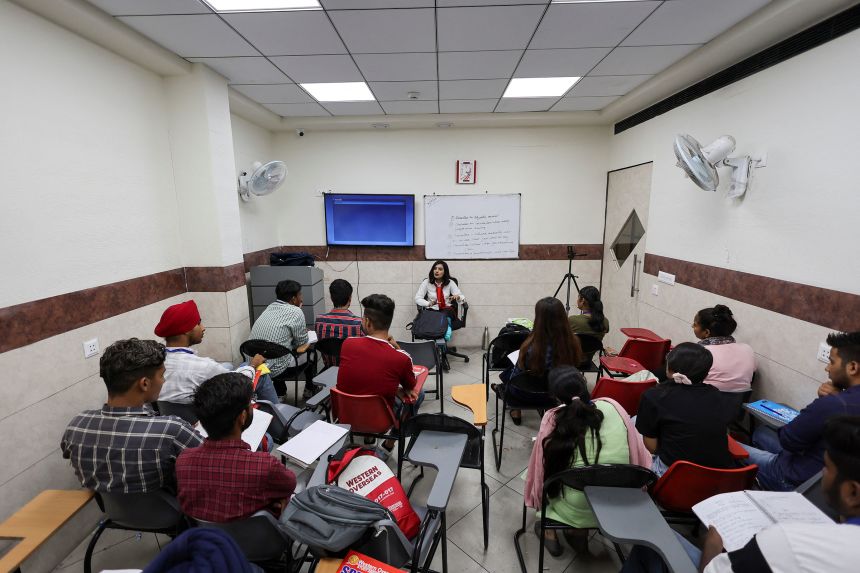
Yet, the prominence of English has also deepened social divides. Those without language skills find themselves largely excluded from lucrative careers.
Wealthier, urban, or higher-caste families are far more likely to be fluent in English and English-medium schools are mainly concentrated in urban areas, leaving rural and lower-caste communities locked out.
“I am not able to find a (well-paying), because they say I do not know English,” said Vaishnavi Gujanan Narote, a housekeeper at a hotel in the capital New Delhi.
She added: “If you know Hindi, then all you can do is stay here and do odd jobs, but not get a good post, because English is a requirement.”
Vijay Kumar, a computer teacher at a non-government organization in Delhi, never learned the language at school. “I feel I did not get the opportunities in my life because I did not know English,” he said.
The dominance of English and Hindi, along with rapid urbanization, have marginalized many of the country’s indigenous languages – tongues spoken by hundreds of tribal communities now far removed from the mainstream.
UNESCO classes nearly 200 Indian languages as endangered, and more than 220 languages in the country have disappeared in the last 50 years, according to the People’s Linguistic Survey of India.
“Many languages in India do not get the respect or place they deserve,” said Aloka Kujur, a writer and activist from Jharkhand, whose mother tongue is Kuduk, a tribal language native to the east Indian state.
The proliferation of English, Kujur said, cost her community recognition in the country. Kuduk is spoken by just under 2 million people and is in a “vulnerable” state, according to UNESCO.

Kujur said that in Jharkand, indigenous groups “have an affinity with their language that cannot be broken,” but notices that Kuduk’s use in everyday life is slipping away.
As India looks toward the future, analysts say the English language’s role in the country might not be going anywhere any time soon.
“There is no fear of sidelining English,” Kothari, from Ashoka University, said. “It is much too strong to be sidelined.”
It’s a sentiment Singh, the first student, agrees with.
“We cannot afford to not learn English in India,” he said. “We are a developing country, we need to learn from the world.”
