





Dungeons & Dragons has rulebooks thicker than most novels, yet some of its most basic mechanics remain the source of endless table arguments. These disputes don’t usually come from obscure edge cases or high-level spell interactions, but from the rules players think they understand when, in reality, they really don’t. Years of house rules, livestream interpretations, older editions, and video game adaptations have blurred the line between what the books say and how people play them, and while it is always up to the DM to decide how certain actions play out and what is allowed in the campaign, it is still good to stick within the guidelines laid out by the main rules.
Related
Dungeons And Dragons: 10 Best Spells To Use In Combat
For those looking to dominate battles in their Dungeons and Dragons campaign, here are the best spells to use while in combat.
Part of the problem is expectation. D&D is both a game and a shared story, and players naturally want the rules to support the dramatic moments they are trying to create. When dice hit the table, logic often gives way to feelings, with things like a natural 20 existing as something incredible that gets the whole group hyped, despite the rules being much more restrictive. Another issue is that many rules are intentionally conservative. Fifth Edition prioritizes speed and flexibility over pure simulation, which means the mechanics often do less than players expect. At the end of the day, the group has to decide whether the argument is worth solving with a quick rule refresher or if it is best to press on and bend the systems to fit the style of the session and the people within it.
Fit the 9 games into the grid.
Start
Pick a tile to place a game.
Time: 00:00
Hint
New
Submit
Start
Criteria Grid
Pick a tile to place a game.
Time: 00:00
HintNewSubmit
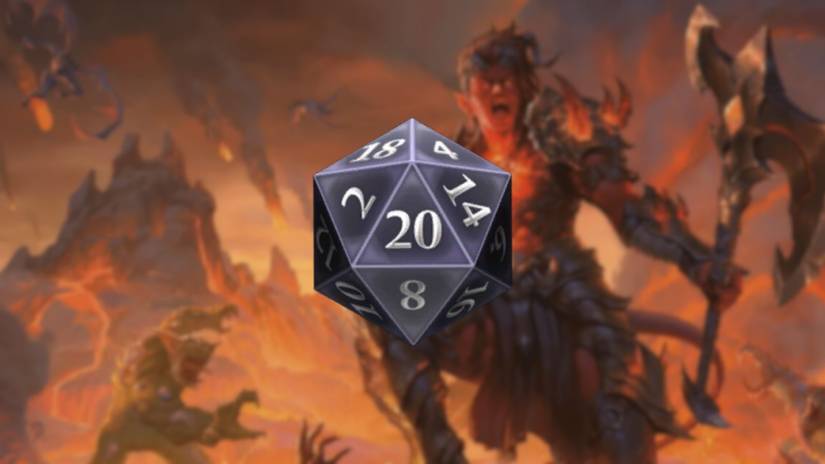
Nat 20s
Not A Guaranteed Success Every Time
Details:
Auto-success only applies to attack rolls
Ability checks still respect feasibility
Natural 20s are celebrated as the most powerful result on a d20, which is exactly why they’re so commonly misunderstood. Many players assume rolling one guarantees success in any situation, from persuading hostile rulers to performing physically impossible feats, and that expectation makes the rare situations where one comes up feel far more cinematic and exciting overall.
The trouble is that the rules follow a very different path from that of automatic success. In the book, natural 20s only carry special weight on attack rolls, where they guarantee a hit and trigger a critical. On ability checks and saving throws, a 20 is simply a high result, and if the task is impossible or narratively implausible, no roll, no matter how lucky, can change that. This distinction keeps outcomes grounded in the world rather than letting dice override logic, even if it means losing some of those clutch moments that are often the most memorable.
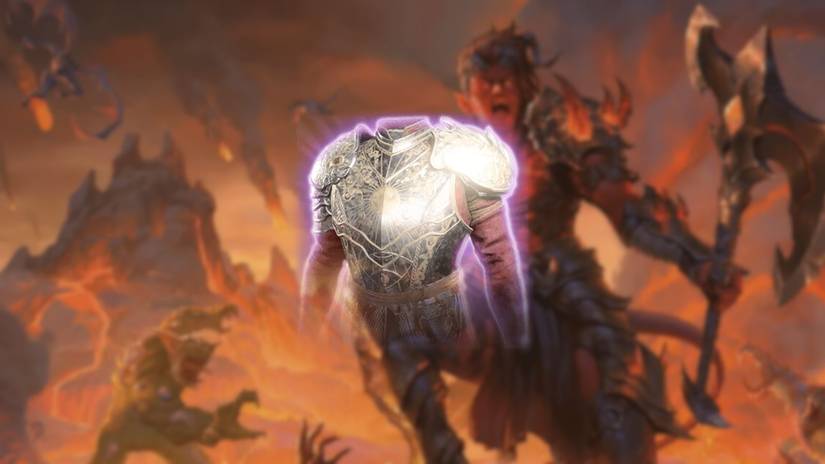
Armor Class
More Than Just Basic Protection
Details:
AC has complexity below the surface
Misses can still strike the target
Armor Class is commonly treated as a measure of how hard a character is to hit, usually imagined as dodging or parrying attacks. This interpretation works fine for lightly armored characters, but it breaks down once heavier armor enters the picture and leads to strange assumptions about combat realism.
Related
Dungeons and Dragons Level 20 Class Tier List
While every Dungeons and Dragons character is powerful by the time they reach level 20, some classes are in a whole different division than others.
In reality, AC is an abstraction representing avoidance, deflection, and absorption all at once. A missed attack doesn’t necessarily mean the attacker whiffed, and it may instead mean the blow landed harmlessly against armor or was partially deflected by a shield. Understanding AC this way clarifies why surprises don’t negate armor, why plate wearers remain difficult to damage, and why high AC doesn’t imply equally impressive acrobatics.
Grappling
Restricting Movement But Not Actions
Details:
Does not prevent the character from acting
Still powerful if a bit less overbearing
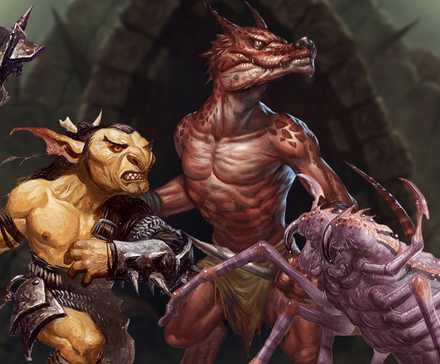
Grappling is one of the most consistently misplayed mechanics because players expect it to function like real-world wrestling. The basic assumption is that a successful grapple pins enemies to the ground, stopping attacks and preventing spellcasting, which, on the surface, sounds pretty damn strong even against weaker enemies.
Related
8 Common Monsters in Dungeons & Dragons That Become Total Nightmares At Higher Levels
Beware these 8 seemingly harmless monsters that become total nightmares at higher levels in D&D!
Mechanically, grappling does reduce a creature’s speed to zero, but that’s the entire effect. A grappled creature can still attack, cast spells, and take actions normally unless additional conditions are applied. This slight limitation is intentional, as it preserves balance and prevents grapples from becoming a universal shutdown tool that would make many fights incredibly trivial. Grappling still excels as a positioning and control option, especially when used in coordination with allies or environmental hazards, but its power is far more limited than many players realize when they attempt to use it.
Two Spells, One Turn
The Bonus Action Trap
Details:
Casting limits are stricter than they look
Specific text on spells matters
Spellcasting rules surrounding bonus actions cause more confusion than almost any other combat mechanic. Many players assume that having both an action and a bonus action means they can freely cast two spells in a single turn, which would be pretty nice, as suddenly mages could take over entire battlefields with a flurry of spells. However, that assumption leads to frequent table disputes that either end in a disgruntled part member or the DM giving in to avoid further confrontation.
If a spell is cast as a bonus action, the only other spell allowed that turn is a cantrip with a casting time of one action. This applies regardless of the spell’s level, which means that powerful casts can be done all at once, assuming they fit within the confines of this framework. There are some more specific situations, such as casting a simple bonus-action spell like Healing Word, which prevents casting a leveled spell with an action, so it is important to fully understand what is and isn’t allowed within the world of magic. The restriction exists to control action economy and prevent spellcasters from overwhelming encounters with stacked effects in a single round, and it should be one of the first things a DM explains when going into detail with a new group of adventurers.
Holding Actions
Readying Anything Comes With A Cost
Details:
Consequences of the delay
Readied spells can be lost
Holding an action is frequently treated as a way to pause a turn without consequences, letting players wait for the perfect moment to act. In practice, readying an action is a deliberate trade-off, not a delay mechanic, that cannot be used as a bridge to the main event without there being some kind of punishment with it.
When a character readies an action, they must define a specific trigger and use their reaction to execute it, but if the trigger never occurs, the action is lost. Reactions spent this way can’t be used for opportunity attacks or defensive abilities, and readied spells risk being lost if the player’s concentration breaks. This structure prevents initiative abuse and rewards decisive play over hesitation, keeping combat tense and forward-moving, and avoiding situations where players could prepare a major swing turn that would easily turn the tide of battle or begin the fight with a major blow.
Franchise
Dungeons & Dragons
Original Release Date
1974
