'/%3E%3C/svg%3E)

'/%3E%3Cpath%20fill='%23b2b2b2'%20d='M241%20382q0%2016%2017%2026%2017%2011%2042%2011t42-11q16-11%2017-26V269H241'/%3E%3Cpath%20fill='%239f7e00'%20d='M241%20379q0%2014%208%2023%209%209%2021%209%2014%200%2021-9%209-9%209-23V269h-59'/%3E%3Cpath%20d='M241%20339v-70h59v110q0%2014-9%2023l-6%205v-68h-15v72q-8%200-14-4v-68zm59%2040c0%2022%2015%2032%2029%2032%2021%200%2030-18%2030-32v-40h-59'/%3E%3Cpath%20fill='%239f7e00'%20d='M266%20277v5h2v12h-3v-5h2v-5h-9v5h2v5h-4v9h3v18h-5v10h34v-10h-5v-18h3v-9h-4v-5h2v-5h-9v5h2v5h-3v-12h2v-5zm42%20101q0%2010%206%2017%206%206%2015%207%2010-1%2016-7%206-7%206-17v-29h-43'/%3E%3Ccircle%20fill='%230044ad'%20cx='329.5'%20cy='372'%20r='6'/%3E%3Cellipse%20fill='%230044ad'%20cx='300'%20cy='340'%20rx='16'%20ry='21'/%3E%3C/svg%3E)



Sign up for Unlocking the World, CNN Travel’s weekly newsletter. Get news about destinations, plus the latest in aviation, food and drink, and where to stay.
Every year after the Michelin guide announces its selection of starred restaurants in France, journalist Nora Bouazzouni receives a flurry of angry and resentful messages.
It’s become an unexpected consequence of her burgeoning reputation as one of the most influential whistleblowers of France’s restaurant industry.
The messages come from despondent restaurant staff, livid at seeing abusive, toxic chefs who have made their lives hell elevated to hero status with the awarding of one of the highest accolades in the industry.
“It’s really the straw that breaks the camel’s back,” Bouazzouni tells CNN.
Since 2017, the French food journalist has reported on toxic restaurant culture in kitchens across France. But it was her latest book “Violence in the Kitchen” published in May, that blew the lid off the story, exposing the extent of physical, emotional and psychological abuse in kitchens across France: open secrets in the industry, little-known to the general French public.
Through testimonies collected from industry workers since 2020, the book recounts chefs erupting in violent tantrums, burning staff deliberately or throwing pans in their faces if they make a mistake during service. For people of color, it’s putting up with race-based harassment and being exploited and mistreated. For women, it’s being constantly sexualized, be it hands patting their bottoms every day, lewd remarks on their appearance and, in a more serious case, rape in a walk-in cooler by a colleague.
In short, few emerge unscathed.
“The testimonies that struck me the most were those that very quickly aimed to dehumanize people in the kitchen,” Bouazzouni says. “Because it’s by dehumanizing people in the kitchen that they can be exploited.”
Toxic kitchen culture is hardly unique to France and has been exposed and denounced for years in Anglophone and European countries.
But Bouazzouni’s work has helped spark a national reckoning in France and has reached the ears of the country’s top lawmakers: On July 7, a motion to create a commission of inquiry into violence in the kitchen was tabled in the French National Assembly.
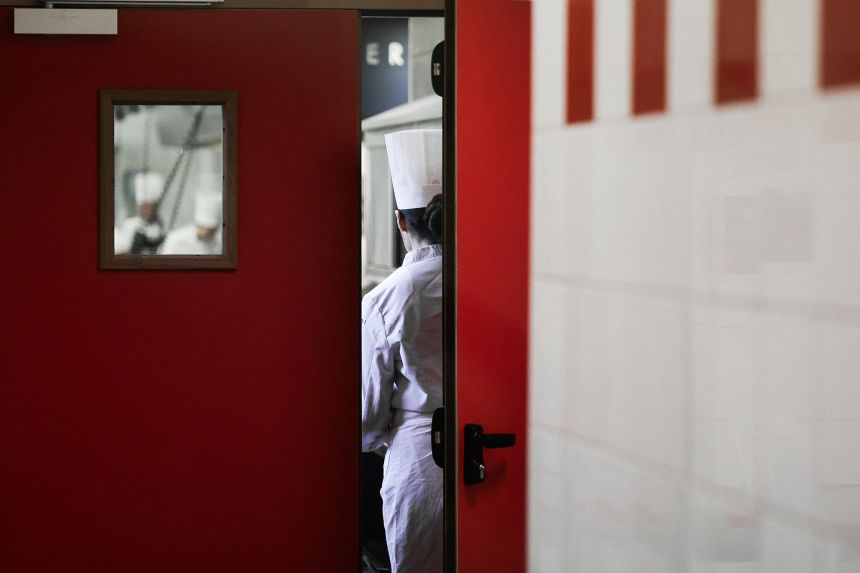
“Indeed, behind the smooth and idealized images of the profession as presented in various entertainment programs hides a rigid, almost military and brutal hierarchical organization,” the motion reads. “The working conditions of the kitchen ‘brigades’ are often degrading, stressful, even violent. Yet silence reigns…”
The mention of the “military and brutal hierarchical organization” is noteworthy as it refers to the system codified by French chef, restaurateur and writer August Escoffier in the late 19th century. Inspired by his time in the military, the kitchen brigade, as it’s known, was modeled after the army, in which rank and hierarchy determines the chain of command. At the top of the food chain are the chef de cuisine and sous-chef, followed by the chefs de partie, who are responsible for specific stations (sauces, seafood, cold dishes and so on), junior cooks or commis and trainees.
Both Escoffier and the precision of the professional restaurant kitchen that he inspired are revered in French culture.
But in many ways, it’s this top-down organization that has facilitated toxic kitchen culture, allowing chefs to abuse their staff with impunity, Bouazzouni points out.
What’s more, the kitchen brigade system has been exported and duplicated in fine dining and hotel kitchens around the world by the legions of international chefs who have come to train in the birthplace of haute gastronomy throughout the decades.
“When foreign chefs come to learn in France, either in schools, or in internships, they go back to work in other countries and continue to export this way of doing things,” Bouazzouni says.
In other words, it’s a vicious cycle.
But how do you undo a century-old French system that is replicated in kitchens around the world?
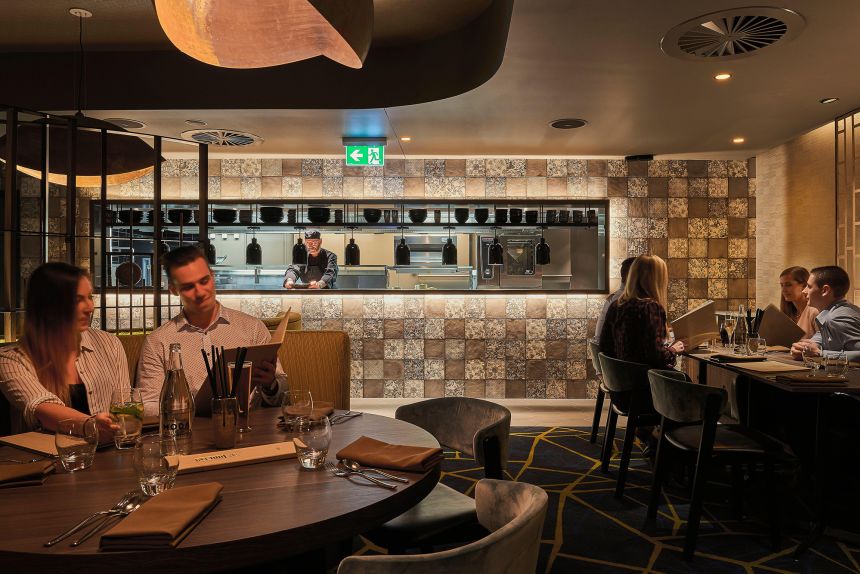
While male-dominated kitchens and high-pressure situations have long been known to contribute to toxic work environments, a 2021 paper published in the Journal of Management Studies offered up one compelling, but simple solution: create more open kitchens.
For the study, researchers from Cardiff University concluded that the unique working environment of fine dining kitchens – isolated, closed, hidden spaces, far from the public eye – comes with a sense of freedom from scrutiny, where regular rules don’t apply.
“What surprised us in our study was the importance of where chefs worked in the context of cultures of bullying, violence and aggression. The kitchen environment effectively became a different moral universe for them,” lead researcher Robin Burrow said in a press release.
The study was based on interviews with 47 chefs from fine dining restaurants around the world.
The cult of celebrity chefdom in France has also contributed to the code of silence that has long muzzled victims. Top chefs are often lionized in long, fawning profiles, documentaries and cooking shows which makes them “untouchable,” Bouazzouni says, adding that the food media bears much responsibility for feeding the “mythology” of French gastronomy.
But over the last five years, the post-pandemic world has flipped the script. France is no exception to the labor shortage and the “Great Resignation” phenomenon driven by overworked, disgruntled employees and younger generations in Western Anglophone countries. Today, 300,000 positions in France’s restaurant and hospitality industry remain to be filled, says Thierry Marx, president of France’s Union of Hotel Trades and Industries (UMIH).
While an average of five new restaurants open every day, 23 restaurants close their doors permanently.
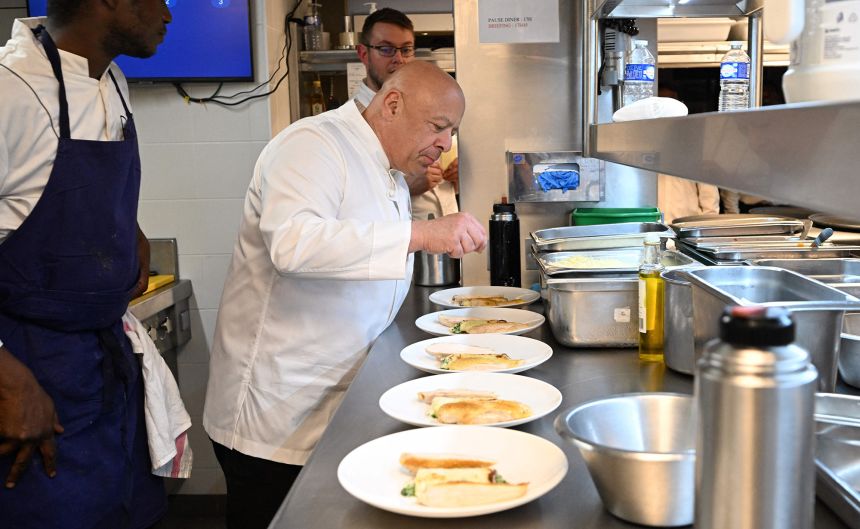
Marx, who runs 10 high-end restaurants in Japan and France including the Michelin-starred restaurant Onor and the Restaurant Madame Brasserie at the Eiffel Tower, explains that the brigade system is necessary for delegating tasks and maximizing efficiency in stressful, high-pressure environments. But he also acknowledged that the system can be flawed, pointing out that the best chefs don’t necessarily make the best leaders.
“I think we need to add management courses and admit that being competent in a professional technique doesn’t necessarily give you managerial know-how,” Marx said. “And it doesn’t mean you can behave like an executioner.”
Over the last few years, the emergence of both the #metoo movement in cinema and of younger generations who are more likely to push back against abuse has helped advance the discourse on creating safe kitchens in France.
Since 2021, a non-profit association Bondir.e, founded by female French chefs, has organized violence prevention seminars in culinary and hospitality schools in a bid to raise awareness early and break the cycle of violence. That’s because in France enrollment in vocational schools can start with students as young as 15, an age when teenagers are still highly impressionable and easy to indoctrinate.
“When you’re 15, you’re still a child,” says Bondir.e spokesperson Vittoria Nardone. “You don’t know what work is, but you’re confronted with violence where strict rules are imposed. You’re told that suffering is normal and a necessary part of success. When you’re 15 and that’s the only example you have to go on, it’s easy to accept.”
The group has also set up a helpline to support victims of violence in the kitchen and offers professional training courses on communication and management in the kitchen.
Both Nardone and Bouazzouni emphasize that while vulnerable individuals and minority groups are easy targets, violence and abuse can be perpetrated by both men and women of all ages, and within all ranks.
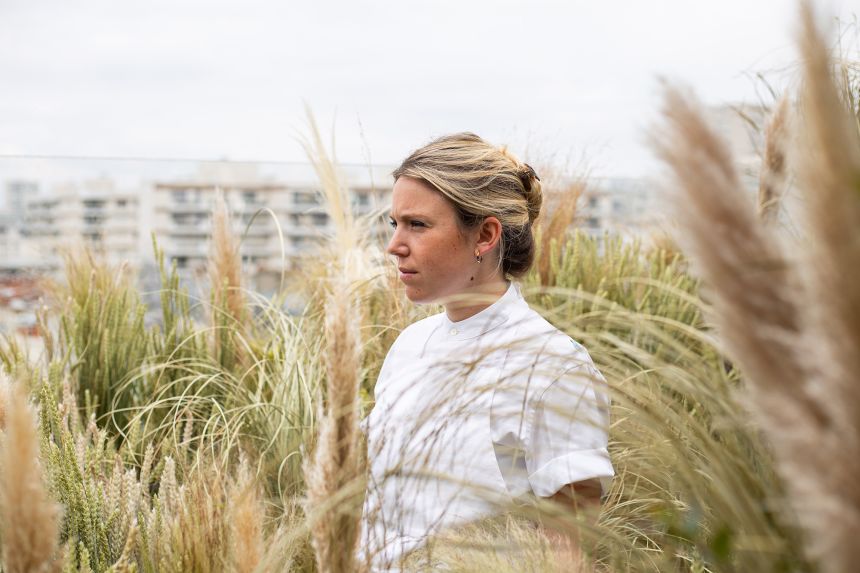
One of the group’s founding chefs, Manon Fleury, 34, has since gone on to open her own restaurant, Datil in Paris, which holds a Michelin star. As the boss, Fleury has made efforts to run her ship differently than her predecessors: the restaurant is closed weekends to promote work-life balance. All new staff are given a code of conduct charter that emphasizes mutual respect and a spirit of collaboration, and leadership training is provided for managers. Communication is also a key part of the workplace, with pre- and post-service briefings and monthly one-on-one meetings. The restaurant is also female-led.
“When I opened my restaurant, I wanted to put women in positions of responsibility. My goal was to set an example, to show that women can and want to hold these positions,” Fleury said in a statement. “…At Datil, there are men in the dining room and kitchen, but all the management positions are held by women.”
Marx acknowledges that times have changed: workers hold more leverage and have different relationships to work.
“Bad management is a fear reflex,” he said. “Falling on the most fragile, that doesn’t work anymore.”
