'/%3E%3C/svg%3E)

'/%3E%3Cpath%20fill='%23b2b2b2'%20d='M241%20382q0%2016%2017%2026%2017%2011%2042%2011t42-11q16-11%2017-26V269H241'/%3E%3Cpath%20fill='%239f7e00'%20d='M241%20379q0%2014%208%2023%209%209%2021%209%2014%200%2021-9%209-9%209-23V269h-59'/%3E%3Cpath%20d='M241%20339v-70h59v110q0%2014-9%2023l-6%205v-68h-15v72q-8%200-14-4v-68zm59%2040c0%2022%2015%2032%2029%2032%2021%200%2030-18%2030-32v-40h-59'/%3E%3Cpath%20fill='%239f7e00'%20d='M266%20277v5h2v12h-3v-5h2v-5h-9v5h2v5h-4v9h3v18h-5v10h34v-10h-5v-18h3v-9h-4v-5h2v-5h-9v5h2v5h-3v-12h2v-5zm42%20101q0%2010%206%2017%206%206%2015%207%2010-1%2016-7%206-7%206-17v-29h-43'/%3E%3Ccircle%20fill='%230044ad'%20cx='329.5'%20cy='372'%20r='6'/%3E%3Cellipse%20fill='%230044ad'%20cx='300'%20cy='340'%20rx='16'%20ry='21'/%3E%3C/svg%3E)


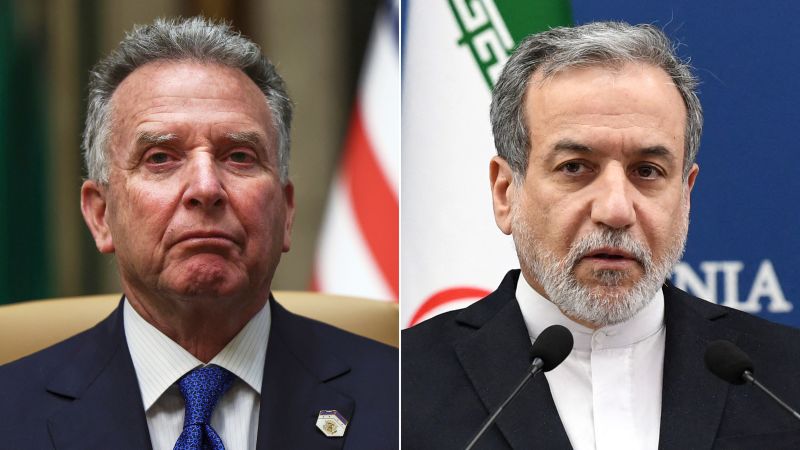


Abu Dhabi, UAE
CNN
—
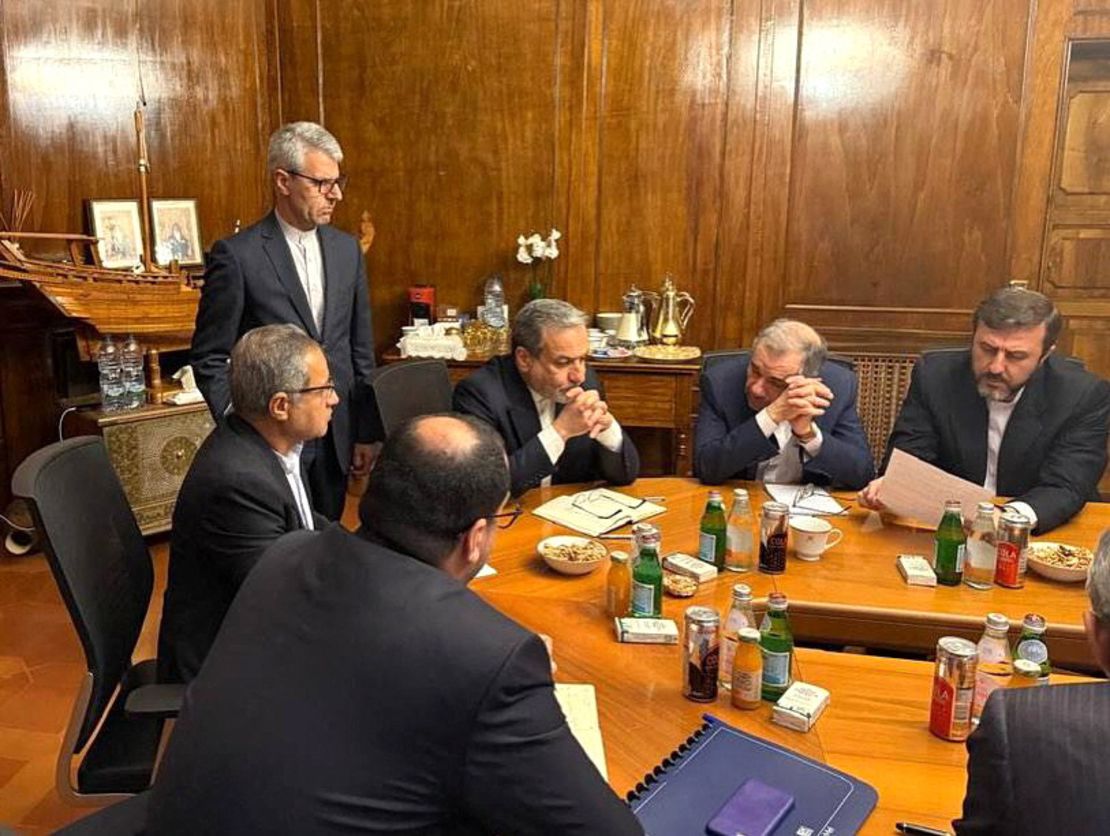
The United States and Iran wrapped up a third round of nuclear talks on Saturday, which experts have described as a more difficult phase of technical negotiations as Washington lays out its conditions.
Iranian Foreign Minister Abbas Araghchi said the “negotiations this time were much more serious than previous ones; we engaged in conversations that were more detailed, more expert-level level and more technical. The expert conversations also went well.”
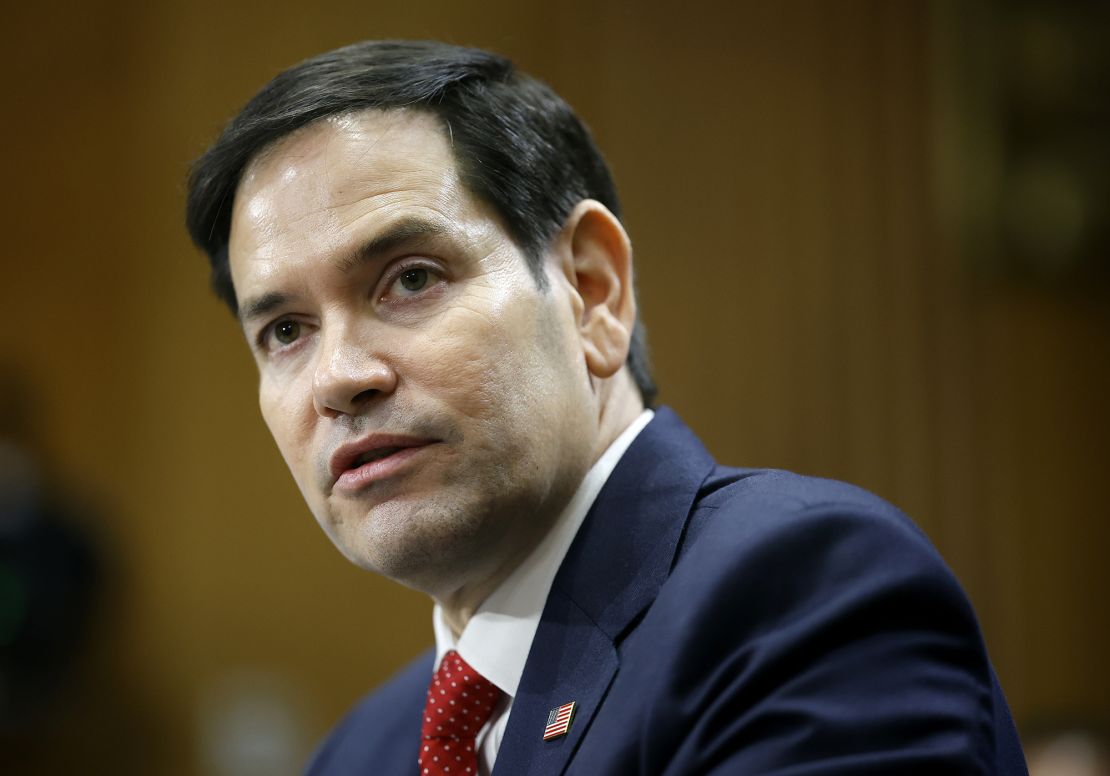
US Secretary of State Marco Rubio said Wednesday that the US does not envision Iran enriching its own nuclear material, but rather importing the nuclear fuel – uranium – needed for a civilian energy program. Iran has repeatedly stated that its right to enrich uranium is non-negotiable.
Both the US and Iran have described previous talks as positive, despite President Donald Trump’s threat of US and Israeli military strikes against Iranian nuclear sites should Tehran fail to accept a deal.
But Saturday’s talks were are set to involve negotiations on the details of Iran’s nuclear program, an area where Tehran and Washington remain sharply divided.
Araghchi said Saturday that there “are still differences in major issues and in details. Until the next talks, we are both going to have conversations back in our capitals to see how to bring these differences back together.”
Oman’s Foreign Minister Badr bin Hamad Al Busaidi said talks will continue next week.
Here’s what we know.
A nuclear deal was reached in 2015 between Iran and world powers, including the US, under which Iran had agreed to limit its nuclear program in exchange for the lifting of sanctions that have crippled its economy.
Formally known as the Joint Comprehensive Plan of Action (JCPOA), the 2015 deal allowed Iran to enrich uranium at a level that ensured that its nuclear program would be exclusively peaceful.
That agreement was abandoned by Trump in 2018 during his first presidential term. Iran retaliated by advancing its uranium enrichment up to 60% purity, closer to the roughly 90% level that is needed to make a bomb.
Iran insists its nuclear program remains peaceful.
Last month, Trump sent a letter to Iran’s Supreme Leader Ayatollah Ali Khamenei proposing negotiations on a new nuclear deal, making it clear that Iran had a two-month deadline to agree to a new deal, a source familiar with the letter’s contents told CNN.
What does Trump want and what are the key issues?
The president has said that he wants a “stronger” deal with Iran than the one reached in 2015 under the Obama administration, but US officials have flip-flopped on their demands over the past month.
In its bid to prevent Iran from developing a nuclear weapon, it remains unclear whether the US is demanding a full dismantling of its nuclear program – including its civilian energy component – or whether it would allow such a program if Iran abandons domestic uranium enrichment.
This month, Steve Witkoff, Trump’s envoy to the Iran talks, said there’s no need for Iran to enrich uranium beyond what is needed for a nuclear energy program. He stopped short of demanding that Iran stop enriching uranium altogether or dismantle its nuclear program.
He reversed his position a day later in a statement on X in which he said any final deal with Iran would require it to “stop and eliminate its nuclear enrichment and weaponization program.”
US Defense Secretary Pete Hegseth meanwhile has called on Tehran to fully dismantle its nuclear program.
Then, in an interview on Wednesday, Rubio said that Iran could have a civilian nuclear program but it would have to import the nuclear fuel needed rather than produce it domestically.
“There’s a pathway to a civil, peaceful nuclear program if they want one,” Rubio told The Free Press. “But if they insist on enriching (uranium), then they will be the only country in the world that doesn’t have a ‘weapons program,’ but is enriching. And so, I think that’s problematic.”
While most countries that enrich uranium domestically also have a nuclear weapons program, others don’t. Brazil, for instance, enriches some uranium domestically for its energy program, according to World Nuclear Association. Meanwhile, the British-German-Dutch nuclear fuel consortium Urenco operates enrichment plants in Germany and The Netherlands, neither of which has nuclear weapons. Those countries, like Iran, are party to the United Nations’ Treaty on the Non-Proliferation of Nuclear Weapons (NPT), which aims to prevent the spread of nuclear weapons.
Last week, US Energy Secretary Chris Wright told The New York Times in Saudi Arabia that Riyadh and Washington were on a “pathway” to reaching an agreement that could see the kingdom enrich uranium.
“The issue is control of sensitive technology. Are there solutions to that that involve enrichment here in Saudi Arabia? Yes,” he said.
Iran has doubled down on its right to enrich uranium and has accused the Trump administration of sending mixed signals.
“Iran’s enrichment (program) is a real and genuine matter, and we are ready to build trust regarding potential concerns, but the issue of enrichment is non-negotiable,” Foreign Minister Abbas Araghchi, who is representing Iran at the nuclear talks, was cited as saying by the state-run Iranian broadcaster Press TV.
Tehran has laid out its “red lines” in talks, including “threatening language” by the Trump administration and “excessive demands regarding Iran’s nuclear program.” The US must also refrain from raising issues relating to Iran’s defense industry, Iranian media said, likely referring to its ballistic missile program, which the US’ Middle Eastern allies see as a threat to their security.
Meanwhile, Iran’s highest leadership has approached the talks with extreme caution. In his first comments on the issue, Khamenei said that Tehran was “neither overly optimistic nor overly pessimistic” about the negotiations with the US.
The Islamic Republic has also tried to present a potential nuclear deal as beneficial to the US. This week, Araghchi touted the possibility of US companies playing a role in Iran’s nuclear energy program, promising “tens of billions of dollars in potential contracts.”
Alongside high-level talks between Araghchi and Witkoff Saturday, technical teams will begin to hammer out the details of a potential agreement.
Michael Anton, the State Department’s head of policy planning, will head the technical team from the US side, spokesperson Tammy Bruce said on Thursday.
The team will consist of roughly 12 working-level experts from various US government agencies and discuss more granular details about a path to a new nuclear agreement, such as potential sanctions relief and limitations on Iran’s nuclear program, a source familiar told CNN.
Technical talks are “challenging” as they will try to address issues that were not pursued in the 2015 deal, said Trita Parsi, executive vice president of the Washington DC-based Quincy Institute. “This requires technical expertise to make sure these different ideas actually can become feasible.”
As well as the issue of enrichment, complications may emerge if “poison pills” are introduced, including a demand to fully dismantle Iran’s nuclear program, “Libya-style,” as Israel has pushed for, he added.
Libya in 2003 dismantled its nuclear program in the hopes of ushering in a new era of relations with the US after its two-decade oil embargo on Moammar Gadhafi’s regime.
After relinquishing its nuclear program, Libya descended into civil war following a 2011 NATO-backed uprising that toppled Gadhafi’s regime and led to his killing. Iranian officials have long warned that a similar deal would be rejected from the outset.
Another hurdle could surface if the US demands that restrictions on Iran’s nuclear program “be in perpetuity,” Parsi said. “Meaning, this would not be like normal arms control agreements, (where) restrictions are time-limited and over time expire.”
The 2015 deal had an expiration date, ending in October 2025 unless otherwise decided by the United Nations Security Council.
When he pulled out of the deal in 2018, Trump lambasted the agreement’s 10-year time limit, saying that even “if Iran fully complies, the regime can still be on the verge of a nuclear breakout in just a short period of time.”
Parsi said there may be an opportunity to extend the timeline. “But anything that pushes toward infinitive and in perpetuity restrictions is very likely going to fail, and perhaps by design.”
Where does Israel stand?
Israel has been among the staunchest advocates for Iran to fully dismantle its nuclear program so it can never acquire a nuclear bomb.
Sources familiar with the matter had previously told CNN that news of the US-Iran nuclear talks were “certainly not” to Israel’s liking, and it remains unclear if Netanyahu was given advance notice of the negotiations or if he was consulted.
The only deal that Netanyahu would view as acceptable is a Libya-style nuclear deal.
The New York Times reported last week that Trump had waved Israel off striking Iran’s nuclear sites as soon as next month to let talks with Tehran play out. The Israeli Prime Minister’s Office did not deny the veracity of the article, instead asserting that Israel’s actions have delayed Iran’s nuclear program.
Responding to the report, Trump said: “I wouldn’t say waved off,” but “I’m not in a rush to do it because I think that Iran has a chance to have a great country and to live happily without death.”
