





Editor’s Note: This story is part of As Equals, CNN’s ongoing series on gender inequality. For information about how the series is funded and more, check out our FAQs.
CNN
—
Roy Wanyonyi steps into the dark and dusty living room, its armchairs still carefully adorned in white lace covers, though it has been many months since guests sat here.
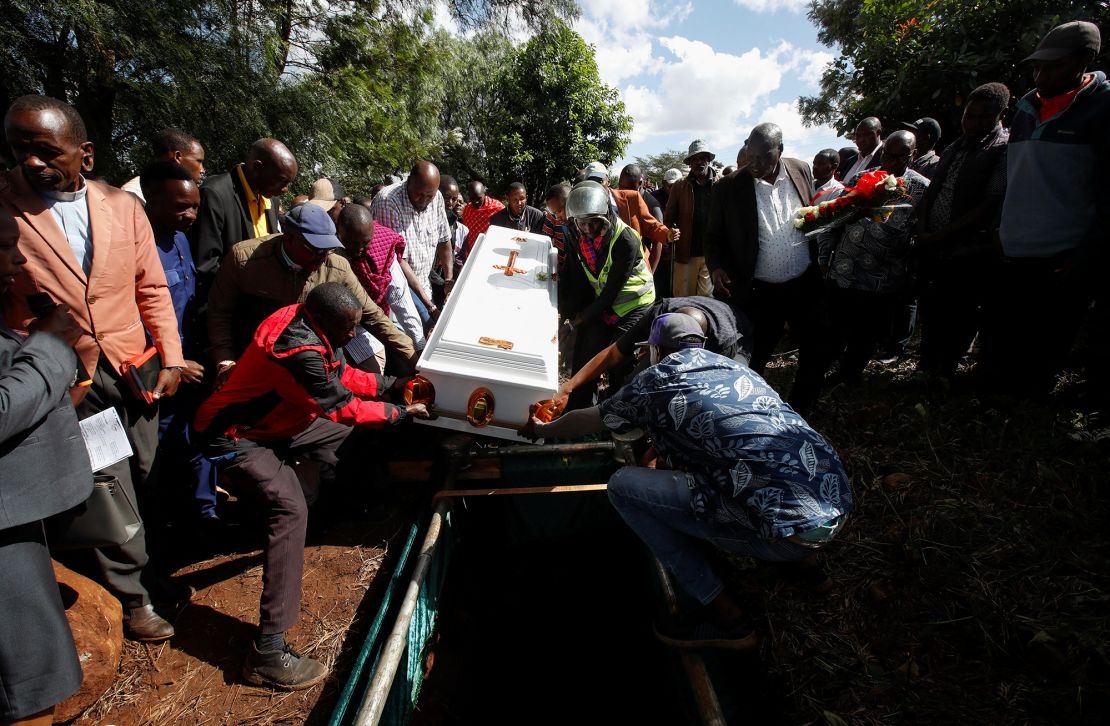
The last time he and his wife, Maximilla Mwanga, were in this home in Webuye, an industrial town in western Kenya, was a little over a year ago. It was also the last time he saw his daughter, Tiffany Wanyonyi, alive.
Like her father, Tiffany was a police officer. She was stationed in the capital, Nairobi, where she lived with her two children. In March 2024, after her grandmother passed away, Tiffany returned to her childhood home to attend the funeral. After the service, Tiffany appeared in good spirits, reminiscing about her grandmother’s long life before leaving the gathering with her husband.
She never made it back to Nairobi.
The next morning, Wanyonyi woke up to the most devastating phone call of his life. It was the local police commander: Tiffany had been murdered.
“My head just went dizzy,” Wanyonyi told CNN. “I didn’t believe…” he added, struggling to find the words to describe his shock, even now.
At the morgue, Wanyonyi and Mwanga, Tiffany’s stepmother, faced their worst nightmare. “The way I found my daughter… was not easy,” Mwanga said, her voice quivering. “She was in two pieces: her head and the body.”
Tiffany’s husband, Jackson Ololtele, is now awaiting trial, charged with her murder. He has pleaded not guilty.
In a country facing a surge in violence against women, Tiffany’s case underlines that even female police officers are not immune.
Last year was the deadliest for women in Kenya, with 170 reported killed (including 127 murders labeled as femicides), according to Africa Data Hub in partnership with Odipodev and Africa Uncensored, which analyzed news reports and court records going back almost a decade.
Already, 2025 is shaping up to be just as deadly. Between January and March 2025 alone, 129 women were killed according to Kenya’s National Police Service, local media reported. The police service wouldn’t confirm this figure or previous years to CNN and campaigners have argued a lack of centralized data is part of the problem in tackling femicide.
The violence is so pervasive that several police officers working on “gender desks” – a special unit established a decade ago to address Kenya’s gender-based violence – told CNN of female colleagues who had been victims of gender-based violence themselves. Such officers are often silenced by stigma, burdened by trauma and failed by the very system they serve, according to experts and female police officers who spoke to CNN.
A dedicated counselling and chaplaincy department is available for officers, Kenya Police spokesperson, Muchiri Nyaga, told CNN. The force would not comment further on perceived failures in the system.
After her death, Tiffany’s parents moved from her childhood home in Webuye. In the garden today, a simple cross and plaque mark her grave.
Strong women and a culture of silence
Inside their new home, Wanyonyi looks at a photograph of Tiffany in her police uniform, his fingers lingering over her khaki jacket. “It was her graduation day,” he said of his first-born child, his eyes crinkling fondly at the memory of watching the ceremony, which was broadcast on national television. It was also one of the proudest moments for their family of officers – Roy’s second-born son is an intelligence officer.
But behind these proud moments were deep struggles. Tiffany’s uniform was no protection from violence in the home, her parents told CNN. She often clashed with her husband over his refusal to seek employment or provide financially for their children, said Wanyonyi and Mwanga.
When asked if his daughter’s job as a police officer offered her protection from domestic abuse, Wanyonyi shook his head. Tiffany’s husband didn’t see her as a police officer, he said. He saw her “as his wife.”
Wanyonyi recalled how after one particularly violent confrontation he felt compelled to intervene. He reported the assault to the police. But just a few days later, the couple reconciled – and Tiffany, being the named victim, withdrew the case.
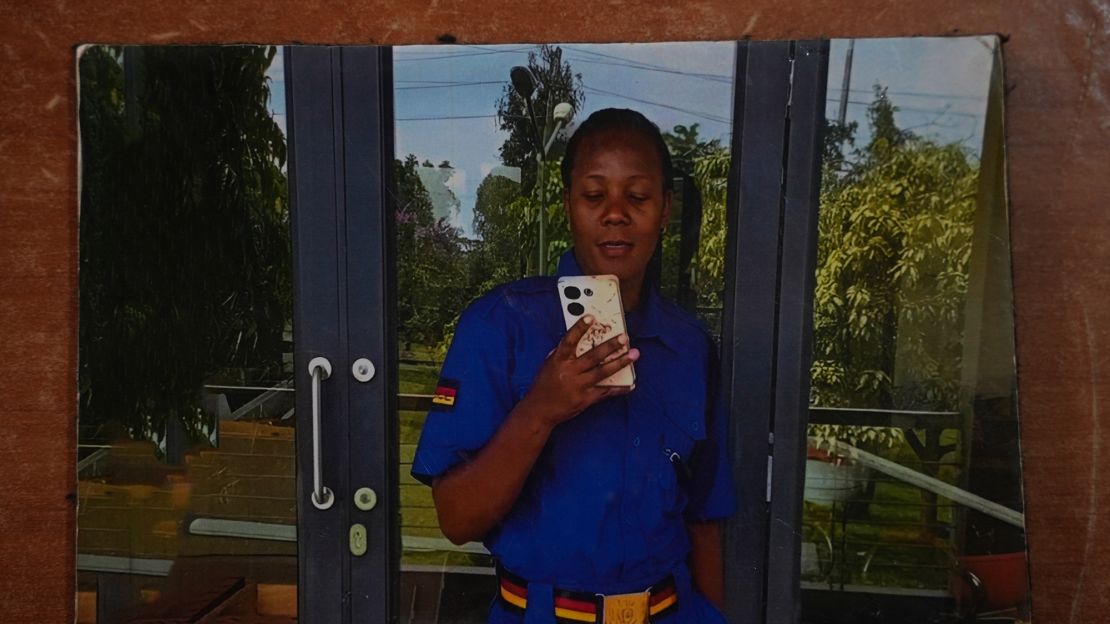
When Mwanga asked Tiffany why she withdrew the case, she said: “‘Mommy, that’s the man I love.’”
Njeri Wa Migwi – a domestic violence survivor and leading activist in Kenya’s fight against femicide – has heard countless stories like this over the years, including from women, like Tiffany, who are often seen as pillars of support for victims.
“The saddest bit about my work,” Wa Migwi told CNN, “is that even the person you are reporting to could be a victim of gender-based violence,” referring to female police officers.
Because Kenyan law requires that any crime be reported within the jurisdiction where it occurred, many female officers choose to remain silent themselves, afraid of the shame and stigma they might face from their own colleagues in reporting their own abuse.
Tiffany’s parents recounted how barely a year into her service as a police officer, she confided to them about her deep humiliation whenever her husband publicly quarreled with and abused her –– often in full view of her colleagues, both at the station and in the staff residential quarters.
In her 20 years in the police service, Consolata – whose name has been changed to protect her identity – has seen many fellow female officers go to extreme lengths to hide their abuse.
She recalled one colleague, a fellow officer, increasingly withdrawing from work, and later, turning to alcohol to cope. “When I pressed her to explain (her change in behavior), she simply said: ‘I’m scared when darkness comes. I don’t want to go to the house,’” Consolata told CNN.
The officer later revealed to Consolata that she was being sexually assaulted by a senior inspector, who in public posed as an attentive mentor. The officer did not report the abuse and the Kenya Police Service would not comment on the incident.
Another fellow female officer repeatedly turned up to work with injuries, Consolata said, and explained them as accidents. Only after neighbors raised concerns did the truth emerge: She was being abused by her husband.
The female officer did press charges against her husband. Though eventually she opted to drop the case, leave the relationship, and request a transfer to a different station.
Consolata isn’t surprised by her colleagues’ initial silence. “Most officers are reluctant to speak up because of societal expectations,” she added.
The high-risk nature of female police officers’ work – from confronting criminals to handling dangerous investigations – means they are often seen as “strong women,” a perception that pressures many of them to hide any signs of vulnerability.
But keeping up this public persona has its dangers, Consolata said.
If female police officers entrusted with seeking justice for women and girls are afraid to speak out about their own abuse, “how can someone be sure that their case will be taken seriously?” Consolata said, adding: “I think it shakes the public’s confidence.”
Meanwhile, the number of female police officers is declining, according to Fatuma Mohamed, Commissioner at the Kenya-based Independent Policing Oversight Authority (IPOA). She cites a report from UN Women which found that in March 2023, of the 106,830 Kenyan police officers, just 7,457 were women – roughly 6.9%.
And yet nowhere are female officers needed more than on the gender desk.
In Kenyan police stations, this is the first port of call for women and girls reporting gender-based violence –– and the face they are greeted with matters.
Declining numbers of female police officers means that gender desks are sometimes solely manned by male officers, which can feel intimidating for women reporting intimate partner violence.
“When it comes to sexual violation,” explained Dorcas Amakobe, executive director of the sports development organization Moving the Goalposts, there are things that “from a cultural perspective, a young woman or a parent would feel uncomfortable telling a man.”
Public trust in the police has already taken a hit amid recent high-profile cases of alleged police brutality, including at most recent anti-government protests earlier this month where at least 31 people died and hundreds were arrested, according to the Kenya National Commission on Human Rights (KNCHR).
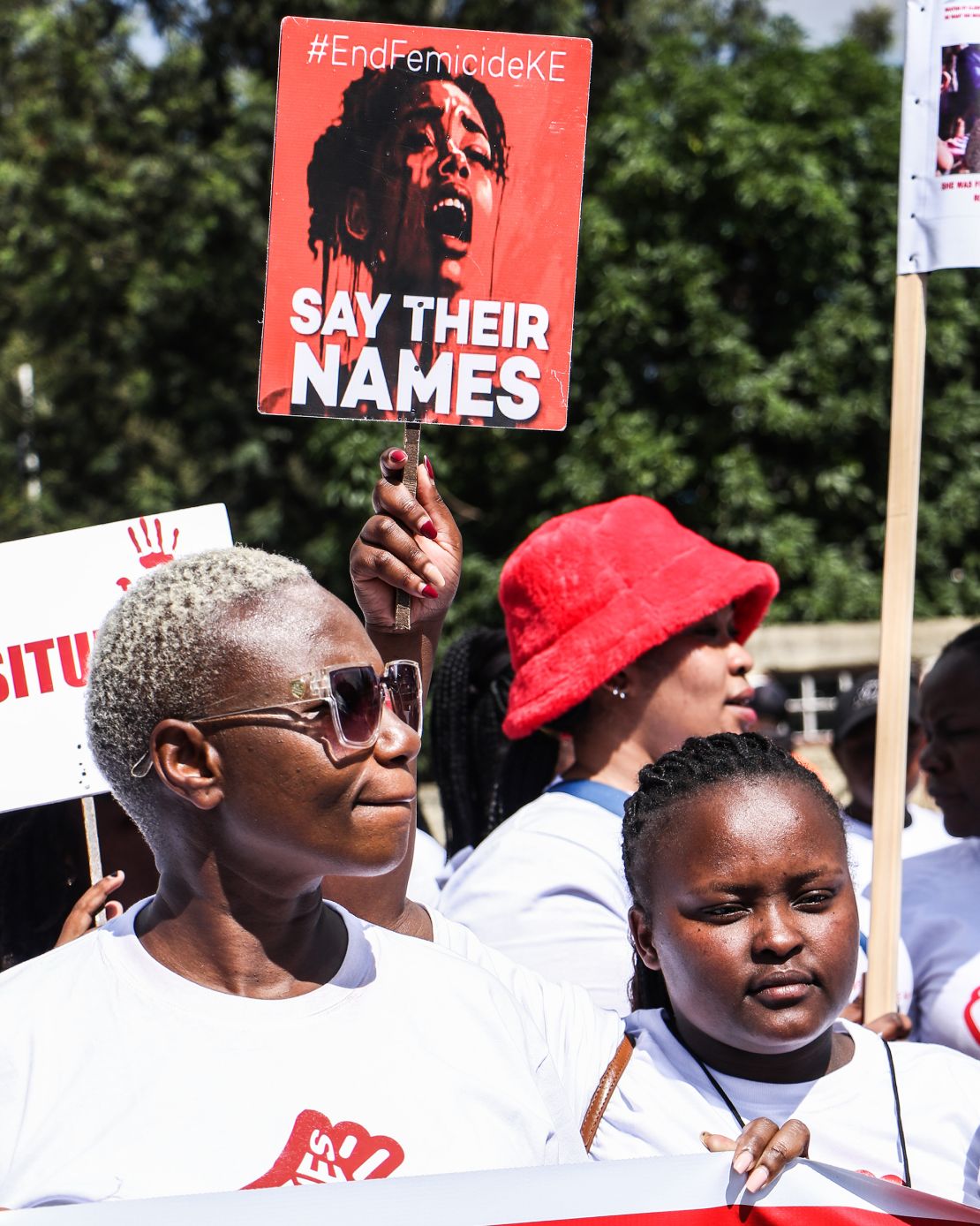
While these clashes with police have been dominating headlines, campaigners against the femicide crisis are still working to keep their issue in the spotlight. That includes how reports of gender-based violence are handled by the police.
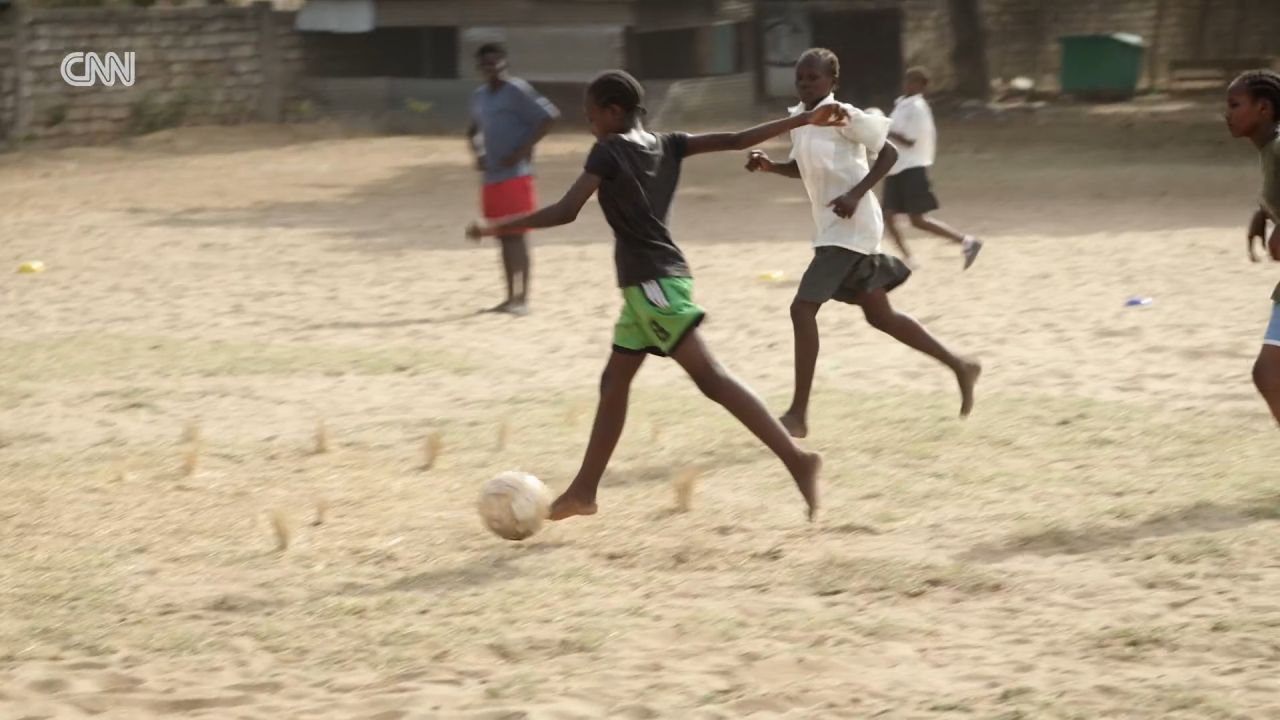
Activist Dorcas Amakobe reflects on creating safe spaces for women.
For female victims of abuse, coming forward to report the crime might be more comfortable for women “when you find someone who looks like you,” Amakobe said of the need for female officers at gender desks.
Gender desk officer Rehema Fondo told CNN, “We hear stories every single day, sometimes five cases in one shift. It’s overwhelming,” of incidents which might span harassment, assault and rape. “At the end of the day, we’re human too. We need psychological support.”
In response, Kenya Police spokesperson, Muchiri Nyaga, pointed to the force’s counselling service. Though he did acknowledge to CNN there is a growing concern within the force over the limited number of female officers in general – which he hopes to tackle with a recruitment drive later this year.
Meanwhile Kenyan activists have criticized the government’s disconnect between its rhetoric on femicide and its actions.
Late last year, Cabinet Secretary Musalia Mudavadi launched the “Safe Homes, Safe Spaces” initiative, which aimed to address gender-based violence in the country.
But his message was quickly overshadowed. The following day, the police cracked down on nationwide protesters rallying against femicide.
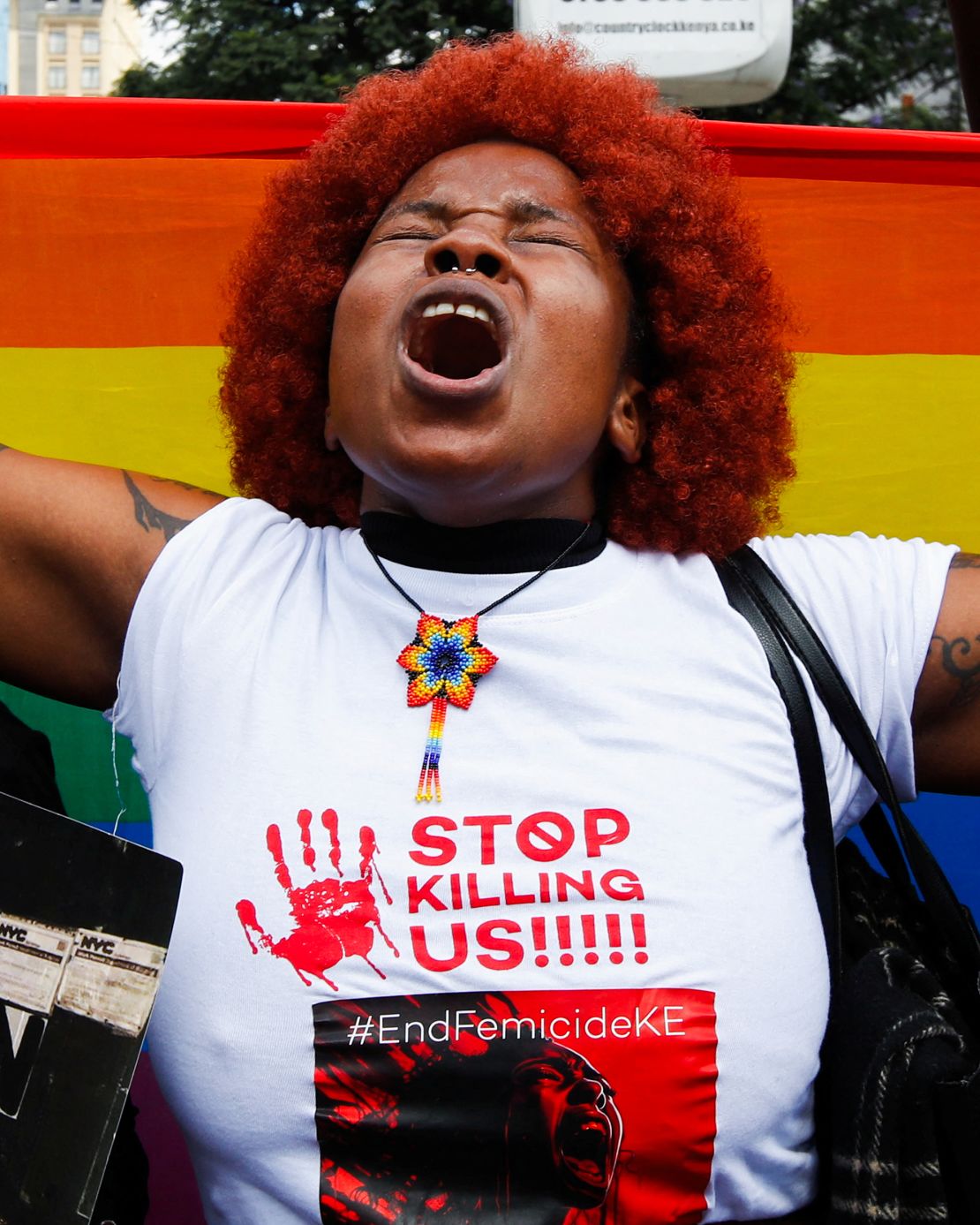
“In Kenya, it feels like the right to assemble is no longer protected by the constitution,” Wa Migwi told CNN, recalling how she was tear-gassed while peacefully attending the protest. “We were simply crying out — stop killing us. And yet, in that very moment, for demanding our rights, we were beaten, humiliated, tear-gassed.”
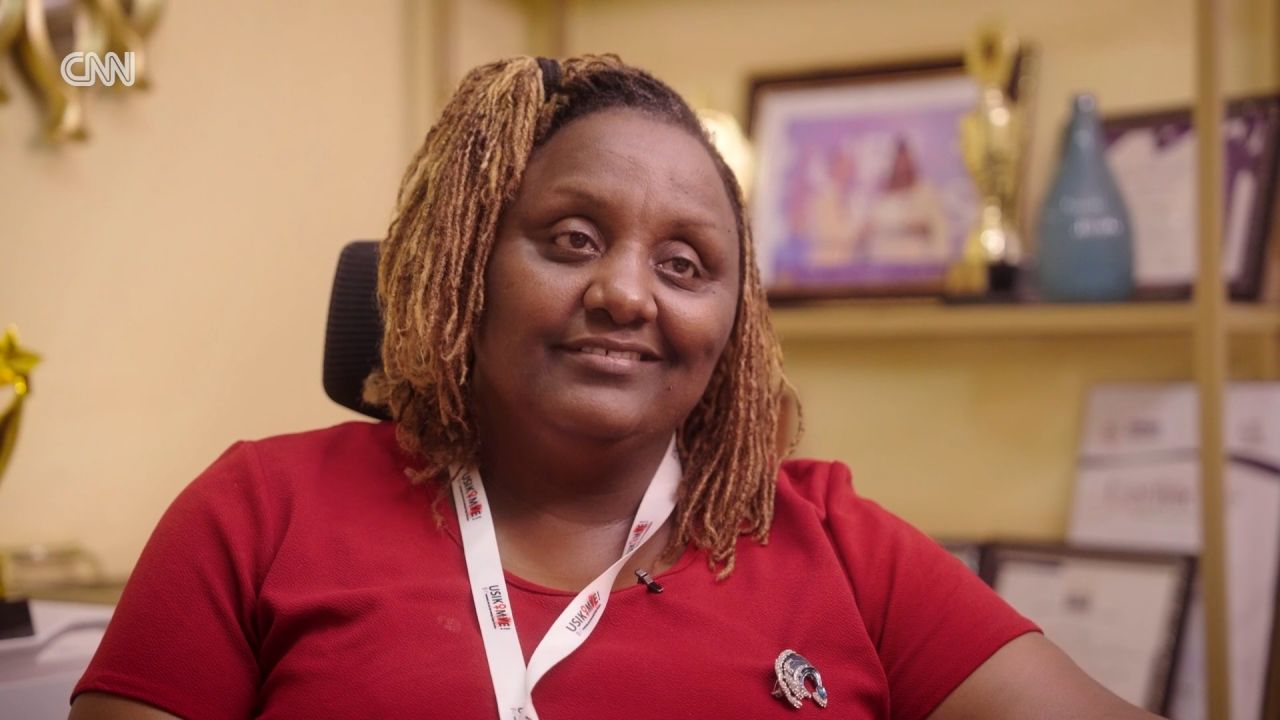
Activist Njeri Wa Migwi recounts how protesters were teargassed at a demonstration against femicide in late 2024.
Kenya’s principal secretary for Internal Security and National Administration, Dr. Raymond Omollo, described the police’s actions as “unfortunate,” acknowledging that while the intent was to maintain order, the execution was “regrettable.”
Wa Migwi believes the Kenyan government should declare the femicide crisis a national disaster, much like it did with the HIV/AIDS pandemic in the late 1990s. After it was declared a national disaster, “they put their resources into (fighting) it,” she added.
Other human rights experts have called out the country’s entrenched patriarchal norms and weak law enforcement, which they say has deepened the femicide crisis.
In January, President William Ruto acknowledged in a special issue of The Kenya Gazette that there were “existing gaps in prevention, response, investigations, prosecution, data management, and survivor support systems in GBV and femicide cases.” He committed to enhanced legal, investigative, and institutional reforms including a specialized task force, police and hospital gender desks, and support for survivors — while also calling on citizens and communities to take moral responsibility.
But for Wanyonyi and Mwanga –– who are now left to raise Tiffany’s two children –– these government pledges need to be followed with real change.
Wanyonyi called for an urgent “way to finish it (the violence epidemic),” adding that women and girls are being “slaughtered, being killed.”
The femicide crisis “leaves scars” on so many “innocent people,” he said.
If you, or someone you know, is being affected by domestic violence, a worldwide list of directories is provided by UN Women. You can also find a list of national agencies on The Pixel Project.
Reporter
Ian Wafula
Editors
Sheena McKenzie, Kara Fox
Visual Editor
Carlotta Dotto
Senior Video Producer
Ladan Anoushfar
Video Editor
Estefania Rodriguez
Camera
Simon Mwai
Saitabao Kaiyare
Assistant producer
Mumo Liku
Photo Editor
Toby Hancock
Coordinating Producer
Marta Simonella
