





The smell of garbage is overwhelming and intense under the Caribbean sun. The accumulated waste is such that an entire street in Havana, far from its tourist district, was blocked to traffic.
Yet garbage collectors here aren’t on strike; they simply don’t come often enough. It’s just another example of Cuba’s decline over the past year, alongside blackouts and water cuts: the results of an economic and energy crisis that is battering the island and that authorities no longer attempt to deny.
Cuba’s economy declined by 1.1% in 2024, according to the government, which since the end of 2023 has spoken of a “war economy” due to adverse conditions. Meanwhile, the United Nations’ Economic Commission for Latin America and the Caribbean (ECLAC) projects it will contract even further this year, by 1.5%. And although inflation is slowing, it remains above double digits, according to official figures.
“We are in a recession, a quite complicated situation. In a country where blackouts last up to 20 hours in some localities, the productive sector does not function,” economist and researcher Everleny Pérez Villanueva, former director of the Center for Cuban Economic Studies at the University of Havana, told CNN, describing the situation of waste collection in the capital, where he lives.
“I go out with my car and there are no traffic lights in the city, there are complicated high-speed areas,” he added.
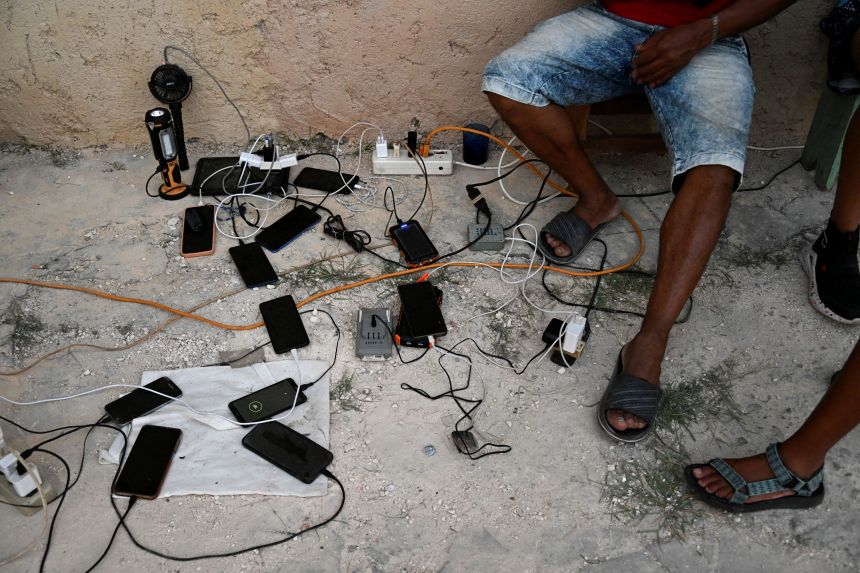
The Unión Eléctrica de Cuba, part of the Ministry of Energy and Mines, reports daily about the energy deficit between supply and demand on its social media pages. It is already common for simultaneous blackouts to cover over 40% of the country, forcing people to change their routines.
“They affect everyone; it’s difficult to stay connected. I always have to be connected; if not, I lose clients,” said Lázaro Hernández, a 38-year-old photographer who works with tourists in Havana. “There are programs that tell you the schedule for the outages; you use that as a guide to know when it will happen and organize yourself.”
“You try to show the most beautiful side. The goal of being able to do tourism is to make you fall in love with Cuba, despite the difficulties,” Jorge Pérez, a tour guide who has worked in the industry part-time since 2018 , told CNN. “When we travel to the provinces it’s a bit more difficult. Trinidad is badly affected by the blackouts. But many clients see it more as an experience. For Cubans, it’s a bitter experience – we suffer all of that.”
For years, the energy system has suffered from a lack of maintenance and investment. The situation worsened with last year’s hurricane season, which led to several general collapses at the end of 2024 and sparked some street protests.
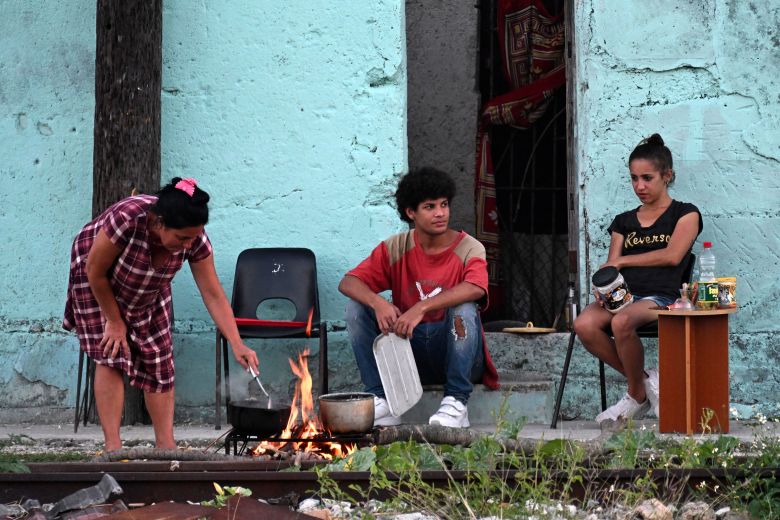
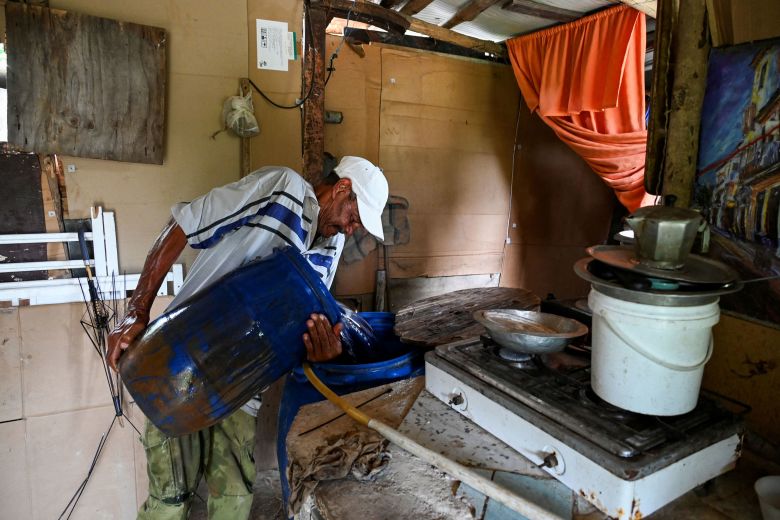
This week, a group of residents blocked the streets of Havana for hours to protest the lack of drinking water.
The president of the National Institute of Hydraulic Resources, Antonio Rodríguez, stated in July that around one million people, about 10% of the population, are affected daily by water supply issues.
“We can’t pump the water due to the energy deficit,” he explained before a parliamentary commission.
Cuban economist Mauricio De Miranda Parrondo, professor at Pontificia Universidad Javeriana in Colombia, stated that the island is undergoing a situation of stagflation.
“Cuba has a collapsed productive sector, meaning it faces a serious problem of supply shortages,” De Miranda said. “This means that the country must import goods to meet basic needs, especially food and fuel, but also manufactured goods.”
Another factor that hits hard is the reduction in oil supply from Venezuela, which in 2011 sent an average of 96,000 barrels per day, but now is around less than a third of that figure, according to Reuters estimates.
The power outages also affect the internet, of which widespread access in Cuba is relatively recent, and which has contributed to expanding the scale of discontent and to the organization of some protests. Groups of students from the University of Havana demanded in June that a price increase on data navigation packages be reversed, a demand that was acknowledged by the government, but without repealing the measure.
Once the six gigabytes of subsidized plans are exceeded, those who need more data will have to pay from 3,360 Cuban pesos (about $140 at the official exchange rate or about $8.50 on the informal market) for just three additional gigabytes, according to the rate chart.
Fewer tourists and less sugar
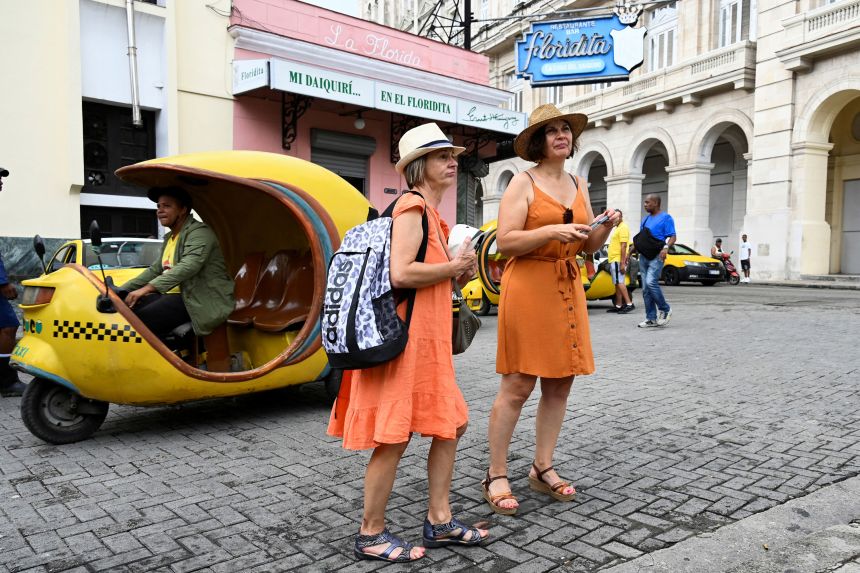
Visitors staying at hotels generally have access to electric generators, which are not usually available in private accommodations. In any case, the crisis also impacts services in the tourism sector, such as restaurants and bars that no longer remain open at night.
“The tourist arrives and sees that there is an energy situation; it makes the experience not good, and that they prefer other destinations,” Chino González, a Havana guide who asked not to use his real name, told CNN. He said these are factors that cause many travelers to decide not to visit the country again.
Between January and July, Cuba received almost 1.58 million visitors, only 83% of the visits recorded in the same period of 2024. But the drop is even greater if only foreign tourists are counted, without Cuban visitors. For their part, hotels (in which Miguel Díaz-Canel’s government continues to invest millions of dollars for infrastructure) had an occupancy rate of just 24% in the first quarter, 11 points less than in that period last year. It was a “very poor” result, Economy Minister Joaquín Alonso Vázquez acknowledged in a June report.
In addition to being a tourist symbol, Cuba also became the world’s leading sugar producer, which used to be one of the mainstays of the economy. However, the 2024/2025 harvest had the worst result in over a century: it did not reach 150,000 tons and was less than half of the previous year’s total, according to EFE calculations based on official sources.
“The harvest was a symbol, and now sugar production practically no longer exists, which was supposed to be the locomotive of the economy. Neither sugar nor tourism,” summarizes the economist Pérez.
The availability of subsidized food has decreased in recent months.
“There has been a considerable reduction of those products. People who cannot afford them with their salary are affected, such as retirees or those earning minimum wage. There is less rice, oil, milk,” said González.
“There’s a lack of sugar, rice, beans, or they don’t arrive at the same time,” noted the photographer Hernández.
These days, pensioners have begun to receive a significant increase in their monthly incomes, which rose from about US$65 to almost US$160. But testimonies collected by Reuters indicate that the impact is not as significant, since there are few products sold at the official rate of 24 pesos per US dollar, while most goods are traded at the parallel exchange, which is around 400 pesos.
“The bare minimum of goods that guaranteed a certain social equality is no longer respected,” Pérez Villanueva says in turn. “In the neighborhood where I live, they gave chicken once a month. Now, it’s been eight months since they have. The shopping cart is more affected than ever, moreso even than during the ‘Special Period,’” he said, referring to the years of intense poverty and economic change in Cuba after the fall of the Iron Curtain.
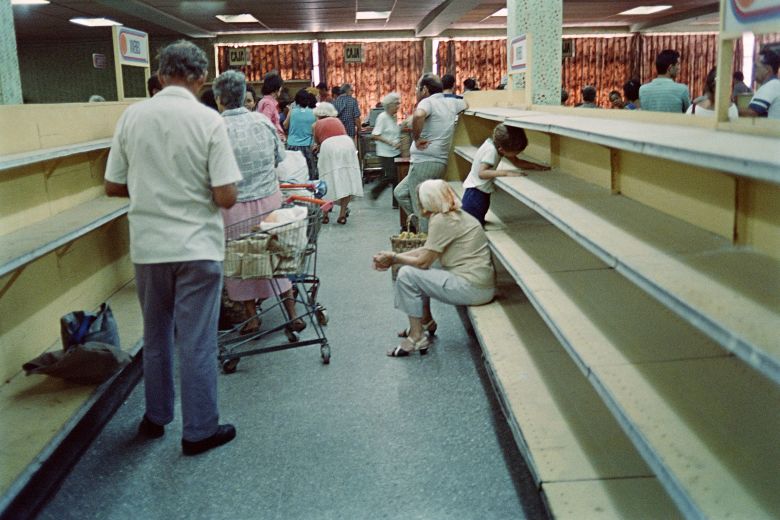
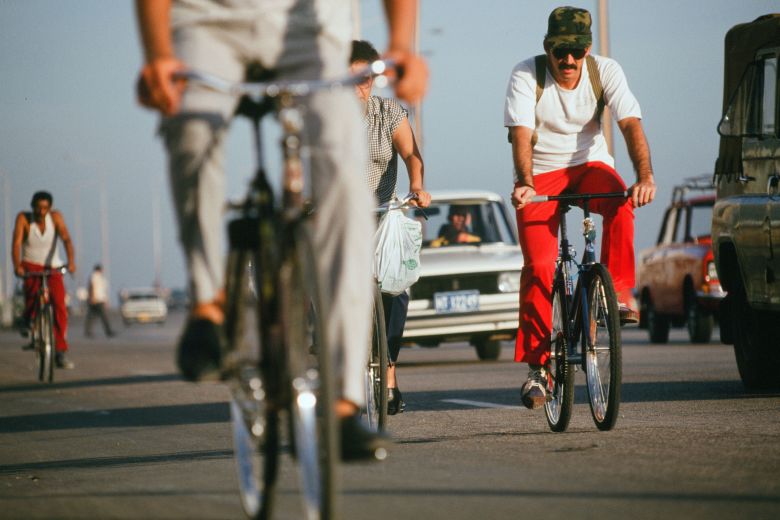
The beginning of the 1990s, marked by the fall of the Soviet Union and the loss of aid that Havana received from its main ally, led to an abrupt recession that forced Castroism to implement economic opening reforms.
“Now we are worse off,” Pérez continues, “because at least during that period certain things were guaranteed. There was no transportation, but a million bicycles were imported from China. Now there isn’t that. Foreign investment was very interested in Cuba, tourism was at its peak. I don’t remember that much, but blackouts weren’t so frequent.”
De Miranda highlighted that between 1990 and 1994 activity contracted more than in the recession of recent years, but pointed out that there were reforms that gave the economy some breathing room. “I think Cuba has not really emerged from that crisis. Between 1990 and 2024 the average annual GDP variation has been only 1.1%,” said the economist.
The Cuban government has historically argued that economic difficulties are mainly due to the United States embargo, as well as new restrictions put in place by US President Donald Trump’s administration, and continues to point to the effects of the crisis caused by the Covid-19 pandemic. However, the authorities are acknowledging the discomfort of the population.
“You don’t defend the revolution by hiding the problems we have,” said Díaz-Canel in July, when a controversy erupted over declarations by the then Minister of Labor, Marta Elena Feitó, who said that there are no beggars in the country but rather “disguised” people, and then had to resign.
The president also said in May on his podcast that the prolonged blackouts are the biggest “obstacle” and severely affect the economy, “which is almost paralyzed in many activities for lack of necessary services.”
The embargo and the inclusion of Cuba on the US list of State Sponsors of Terrorism “are external factors” that do not depend on the Cuban government, points out the economist Pérez, but he adds that “there are internal issues that have not been resolved.”
Díaz-Canel’s government, De Miranda pointed out, “has not been able to present a credible strategy for overcoming the crisis” in the face of the multitude of problems caught in vicious circles. The Cuban economy “cannot move forward until it abandons the centralized administration model, which is closely tied to the political system,” he said. He commented that the measures implemented by the authorities are partial and in turn create other problems, “but what stands out is the paralysis.”
The migratory exodus has risen in recent times and in 2024 the population fell for the fourth consecutive year, now below 10 million inhabitants, according to official figures.
